

Academic Catalog - 2025-2026
Updated October 22, 2025

Cornerstone College & Seminary (CCS) provides a Christ-centered pathway to a theological and professional education that fully equips our students for kingdom work in the church and in the world.
Introduction
Cornerstone College & Seminary (CCS) welcomes campus visits from prospective students and other individuals. Arrangements can be made by contacting the main number listed above.
CCS complies with the Federal Americans with Disabilities Act and Virginia’s Disability Act. The CCS provides equal access to all its educational programs to every qualified student without regard to educationally unrelated disabilities. Students requiring special individual services or equipment will be responsible for the expenses thereof, including the expense of providing tutors, personal attendants, medical technicians, aides, certified signers and so-forth. The faculty and administration of the school will do all within reason to assist the students in communicating with proper community or government agencies to secure available assistance to meet the student’s needs.
The regulations, requirements, and general information in this document are official for the academic school year referred to on page one only and are subject to revision at any time by vote of the Board of Directors or administration. CCS may need to withdraw courses because of lack of enrollment or other unforeseen circumstances. If changes must occur, students will be promptly notified.
Changes will be effective at the time so determined by the proper authorities, and the changes will apply only to prospective students–not those already enrolled–unforeseen circumstances notwithstanding. This catalog is a general information publication only, and it is not intended to, nor does it contain all regulations that relate to students. For the most current revisions of the Catalog, see the CCS website.
Mission
Cornerstone College & Seminary (CCS) provides a Christ-centered pathway to a theological and professional education that fully equips our students for kingdom work in the church and in the world.
General FAQs
What does Cornerstone College & Seminary believe about Jesus Christ?
We believe that the Lord Jesus Christ is fully God. He was born of a virgin; He lived a sinless life; He performed miracles; He was crucified under Pontius Pilate; He shed His blood to save sinners; He rose bodily and was seen by eyewitnesses; He ascended to the right hand of the Father, and all the earth will see Him when He returns in power and glory (John 8:58; Isaiah 9:6; Isaiah 7:14; Matthew 1:18-25; 2 Corinthians 5:21; 1 Corinthians 15:3-7, Acts 1:9-11).
See our Statement of Faith for more info about our beliefs.
When was Cornerstone College & Seminary Founded?
Cornerstone College & Seminary was founded as Fredericksburg Bible Institute in 1969 under the leadership of Dr. G. Albert Brown. Compelled to be a servant to those who desired to know more about the Bible, Dr. Brown’s vision later bloomed into a national center for biblical training.
Vision
Cornerstone College & Seminary seeks to be a premier educational institution that prepares our students for meaningful lifework.
Board Members
Dr. Richard Barnett
Board Chair
Bible/Theology
B.S.E.E., The Ohio State University
M.R.E., D.R.E., Fredericksburg Bible Institute & Seminary
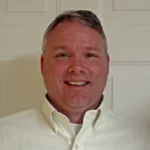
Dr. Joseph Holmes
Vice Chair
Christian Education
M.Ed., Western Governors University
Ed.D., Christian Education and Curriculum Liberty University

Dr. Chris VanBuskirk
Treasurer
Ministry Leadership, Christian Education
M.B.A, Western Governors University
Ed.D., Trinity Theological Seminary

Mr. Martin Chang
Member
Dr. Glenn Prescott
Member
Mr. Ryan Flanders
Member
Staff
At Cornerstone College & Seminary, our administrative staff are prayerfully selected for their spiritual maturity, professional competence, and servant-hearted dedication to Christ-centered education. Each team member exemplifies the biblical qualities of integrity, humility, and wisdom, seeking to lead with the heart of a servant (Mark 10:45) and steward their responsibilities in a manner that honors God. Committed to student success, they provide support and guidance with compassion, striving to reflect the love of Christ in every interaction while upholding the mission of equipping students for faithful ministry.
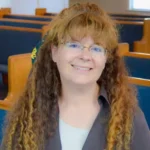
Julie Wallace
President
Christian Education
B.S., M.S., Strayer University
Ed.D., Liberty University
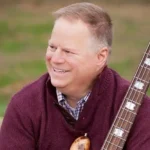
Tim Wallace
Academic Dean
Bible/Theology
M. Div., Liberty University
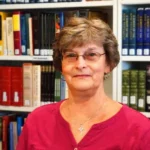
Karen Tate
On-Site College Librarian
B.A. Interdisciplinary Studies
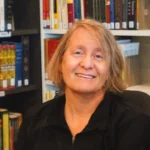
Berna Shetti
Finance Director
Diploma, Nassau Scholengemeenschap

Samuel Rhoades
Director of Digital Marketing
A.B.S., Cornerstone College & Seminary
A.S.B.A., Lancaster Bible College
Faculty
The faculty at Cornerstone College & Seminary are dedicated men and women of faith who teach with both theological depth and a heart for discipleship. Guided by the Word of God and empowered by the Holy Spirit, they embody the calling of 2 Timothy 2:2—faithfully passing on truth to the next generation of servant-leaders. Each professor is not only academically qualified but spiritually grounded, seeking to model Christlike character in and out of the classroom. With a student-focused approach, they invest personally in their students’ growth, equipping them to rightly handle the Word of truth and serve the Church with integrity and conviction.
Camille Atkins
Library Science
M.A., Catholic University
Dr. Richard Barnett
Board Chair
Bible/Theology
B.S.E.E., The Ohio State University
M.R.E., D.R.E., Fredericksburg Bible Institute & Seminary

Logan Castle
Bible/Theology
M.Div., Liberty University
D. Min, Liberty University
James Clanagan
Bible/Theology
M.Div., Regent University

Chris Condos
Biblical Counseling
B. A., Pastoral Studies, Clearwater Christian College
M.Div., Calvary Baptist Theological Seminary
D. Min., Cornerstone College & Seminary

Shawn Dandridge
Bible/Theology
M.Div., Liberty University
D.Min., Asbury Theological Seminary
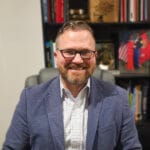
Michael Hensley
Organizational Leadership
MS, Columbia Southern University
Ed.D (ABD) Abilene Christian University
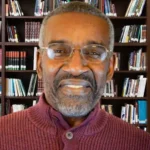
Johnny Hicks
Christian Education
A.S., Germanna Community College
B.A., M.B.A., Strayer University
M.C.E., D.C.E., Andersonville Theological Seminary
Dr. Joseph Holmes
Vice Chair
Christian Education
M.Ed., Western Governors University
Ed.D., Christian Education and Curriculum Liberty University
Donald King
Bible/Theology
B.S., Wingate University
M.R.E., D.R.E., Cornerstone College & Seminary

Youmi Lim
Bible/Theology
B.A., George Mason University
M.Ed., Regent University
M.Div., The Southern Baptist Theological Seminary
D. Min., Cornerstone College & Seminary
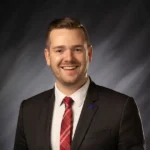
Zachary Payne
Bible/Theology
M.S.C., Purdue University
M.B.A., University of South Indiana
D. Min., Cornerstone College & Seminary
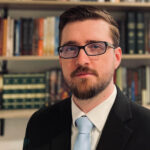
Jason Quintern
Biblical Studies
Ph.D., Bible Exposition, Biblical Studies

Fritz Raymond
Bible/Theology
B.S.B.A., Columbia College
M.A., Webster University
Th.M., Fredericksburg Bible Institute & Seminary
Ph.D., Kingsway University
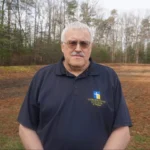
Stephen Tate
Bible/Theology, Information Systems
AAS, Germanna Community College
BS, Strayer College
Th.B, M.R.E., Th.M., D.R.E., Fredericksburg Bible Institute and Seminary
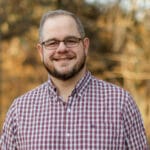
Russell Threet
Bible/Theology
M. Div., Liberty University
MACM., Liberty University
D. Min. (ABD), Forge Theological Seminary
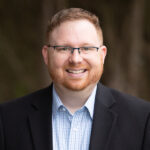
Bryan Turner
Practical Ministry, Christian Education
Master of Christian & Family Ministry, Southwestern Assembly of God University
Dr. Chris VanBuskirk
Treasurer
Ministry Leadership, Christian Education
M.B.A, Western Governors University
Ed.D., Trinity Theological Seminary
Julie Wallace
President
Christian Education
B.S., M.S., Strayer University
Ed.D., Liberty University
Tim Wallace
Academic Dean
Bible/Theology
M. Div., Liberty University
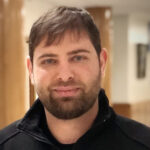
Bryce Woerner
Education, History, Religion
MAR, Biblical Studies, Liberty University
Ph.D., Education, Liberty University
Brandon Worthington
Bible & Theology
M. Div., Biola University
History & Heritage
Cornerstone College & Seminary, founded as Fredericksburg Bible Institute in 1969, was the vision of the late Dr. G. Albert Brown, who, more than forty years ago, sought to educate those who desired to know about the Bible. Dr. G. Albert Brown, Jr. was the founder of Fredericksburg Bible Institute and Seminary and became the institution’s first President. He was a man of God who had the blessings of the Almighty upon his ministry. Scores of pastors who have received part, or all, of their Bible college and Seminary training were blessed by Dr. Brown. He was a man of impactful prayer and Biblical devotion. Dr. Brown believed in the power of prayer because the Bible teaches us to pray, and he believed in the truth of the Bible. He was a man of vision who took his lead from Proverbs 29:18, “Where there is no vision, the people perish.” His ministry was successful because people knew Dr. Brown loved and cared for them, but more importantly, he loved the Lord. Dr. Brown continued to establish the institute through milestones of achievement. Dr. Brown went to heaven to be with the Lord on January 31, 2008, and his presidential leadership was passed to Dr. Gary Foss.
The institute was granted a tax exemption by the federal government in 1970 and a tax deduction for contributions by the Internal Revenue Service. The State Government then gave the institute tax exemption on textbook sales in 1975. According to the Code of Virginia, Section 23-266 A-2, this institution was permitted by the Council of Higher Education on February 3, 1982, to confer degrees. The Veterans Administration approved the institute to provide educational benefits beginning on August 23, 1983. The International Accreditation Commission accredited the institute on September 15, 1983. Following Dr. Brown’s lead, CCS is still reaching new milestones and constantly improving for the sake of its students. Dr. Brown went to heaven to be with the Lord on January 31, 2008, and his presidential leadership was passed to Dr. Gary Foss. Dr. Foss served as President from January 2008 until June 2016. Gary is fondly remembered with his wife, Andy, as the founder of Fredericksburg Christian School. He served as their Head of School, equipping students for over forty years. The Board of Directors voted
Dr. Richard (Dick) Barnett into the presidency in 2016. Dr. Barnett oversaw the partnership with
Lancaster Bible College in 2017 and led the transition from FBIS to Cornerstone College of
Virginia in 2018. In 2023, the Board of Directors voted Dr. Julie Wallace, who was serving as Provost, to serve as the fourth college president. Dr. Wallace has a long Christian Education ministry history and holds a Doctor of Educational Leadership. In 2024, the college name was changed to Cornerstone College & Seminary.
Charter
Fredericksburg Bible Institute was chartered on September 2, 1969, by the State Corporation
Commission. On June 5, 2018, Fredericksburg Bible Institute and Seminary changed its name to Cornerstone College of Virginia. On July 21, 2024, the college name was changed to Cornerstone College & Seminary.
Conferral of Degrees
Cornerstone College & Seminary is a religious institution exempt from state regulation and oversight in the Commonwealth of Virginia. CCS confers degrees under a religious exemption through the State Council of Higher Education according to the code of Virginia, Section 23-266 A-2. Although credits may be applied to various degree programs of other institutions, the curriculum is theological only.
Journey to Accreditation
Cornerstone College & Seminary is in the process of becoming accredited simultaneously through two accrediting bodies. The institution is currently in candidate status with the Association of Independent Christian College & Seminaries (https://AICCS.org). In addition, the institution is pursuing accreditation with TRACS (https://TRACS.org) – Transnational Association of Christian Colleges and Universities. CCS is currently in correspondence status with TRACS. The first initial application for accreditation was submitted to TRACS in February 2025. CCS is currently responding to the first round of application responses received from TRACS. Pursuing accreditation does not constitute, imply, or presume accredited status at present or in the future.
Institutional Goals
Within the context of the CCS mission, we are committed to equipping students for kingdom work through the following goals:
- Within the context of the CCS mission, we are committed to equipping students for kingdom work through the following goals.
- Understand the Bible and theology to interpret the world around us through a biblical worldview.
- Develop a community and a student body who grow in their personal relationship with Christ.
- Prepare students to be lifelong learners who can positively impact diverse workplaces.
- Equip students to acquire ministry skills for local and worldwide Christian service.
Statement of Faith
- The Bible is the divinely inspired, infallible, inerrant, and revealed Word of God (2 Timothy 3:16).
- God is revealed in the Scriptures as God the Father, God the Son, and God the Holy Spirit, commonly referred to as the Trinity (Colossians 1:15-18; Acts 5:1-4).
- The Lord Jesus Christ is fully God. He was born of a virgin; He lived a sinless life; He performed miracles; He was crucified under Pontius Pilate; He shed His blood to save sinners; He rose bodily and was seen by eyewitnesses; He ascended to the right hand of the Father, and all the earth will see Him when He returns in power and glory (John 8:58; Isaiah 9:6; Isaiah 7:14; Matthew 1:18-25; 2 Corinthians 5:21; 1 Corinthians 15:3-7, Acts 1:9-11).
- The Holy Spirit is the third person of the Godhead and equal with the Father and the Son in every divine perfection. He convicts of sin, regenerates, enlightens, endues for service, comforts, and guides believers (John 14:16-18, John 14:26).
- All humanity in its natural state are sinners, lost, alienated from God, and spiritually dead: “All have sinned and fallen short of the glory of God” (Romans 3:23) and, therefore, need salvation.
- The Bible, inspired by God, is the final authority for all practices of sexuality, and God wonderfully and immutably creates each person as male or female. These two distinct, complementary genders together reflect the image and nature of God. Any form of sexual immorality (including adultery, fornication, homosexuality, lesbianism, bisexual conduct, bestiality, incest, pornography, and attempting to change one’s biological sex) is sinful and offensive to God (Genesis 1:26-27; 1 Corinthians 11:12; Leviticus 18:1-30; Leviticus 20:13; Romans 1:26-29; 1 Corinthians 5:1; 1Thessalonians 4:1-8; Hebrews 13:4; John 3:3-7; Jude 1:7).
- Salvation is by grace alone, a gift of God, through repentance and faith in the Lord Jesus Christ, who died for our sins according to the Scriptures (1 Corinthians 15:3). Those who thus receive Christ by faith have their sins forgiven (Ephesians 1:7) and their hearts cleansed (Acts 15:9), become born of the Spirit, become children of God (John 1:12-13) are made new creatures in Christ (2 Corinthians 5:17). They are eternally secure (John 10:28).
- Only two Scriptural Ordinances exist: Baptism and the Lord’s Supper. Baptism is a command of our Lord Jesus Christ. (Matthew 28:18-20). The Lord’s Supper is for remembering Christ’s death, burial, and resurrection with the anticipation of His return (1 Corinthians 11:26).
- Christ personally instituted the Church, which He commissioned to make disciples of all nations, to baptize believers, and to teach them to do all things He had commanded (Matthew 16:17; 28:18-20).
- There are only two classes of humanity in God’s sight: saved and lost. The saved, those “Born Again” through faith in Jesus Christ, go to be with Him in conscious blessedness (Luke 23:39-43) after death and shall be raised bodily to live with Him eternally (1 Corinthians 15:35-49); the unsaved shall be separated from God at death and shall be raised bodily to be placed in eternal torment (John 5:28-29).
- “Born again” Christians live a life dictated by the Holy Spirit (Galatians 5:16-25; Colossians 2:6) and yield to God (Romans 6:13). All Christians are called to share their faith with others by word and deed (Matthew 28:16-20).
Academics Overview
Cornerstone College & Seminary academic programs are designed to equip students with a comprehensive understanding of the Bible and its application to life, ministry, and scholarship. Through an integrated study of biblical theology, hermeneutics, and exegesis, students will explore the unfolding story of God’s redemptive plan and develop the skills to responsibly interpret and communicate Scripture. Grounded in sound doctrine, historical analysis, and practical application, this program prepares students to serve effectively in ministry, teaching, and leadership roles while nurturing personal spiritual growth and a love for God’s Word. Students are prepared for lifelong study, interpretation, and application of the Scriptures. By developing their understanding of biblical content, theology, and language tools, students will be equipped to fulfill roles in ministry, education, and service with the Good News of the Gospel of Jesus Christ within the church and society.
Educational Philosophy
Cornerstone College & Seminary builds its academics on the foundation of the Holy Bible. This biblical worldview framework is centered on the concept that the Bible is the ultimate authority in each individual’s life. Based upon the principles in 2 Timothy 3:16, the Bible is “God-breathed” and is the individual’s source to be fully equipped to be successful in life. Built upon the foundation of the ultimate authority of the Bible, the chief purpose in lives of CCS stakeholders is to glorify God in all things according to Romans 11:36. Furthermore, each person is a special creation of God, revealed in Psalm 139:13, “For you created my inmost being; you knit me together in my mother’s womb”. As His creation, our purpose in life is to live for Christ as stated in Ephesians 2:10, “For we are God’s workmanship, created in Christ Jesus to do good works, which God prepared in advance for us to do”.
Worldview Statement
We view all aspects of a person’s personal and professional life through these biblical postulates. As such, we are convinced that we are required by God in accordance with Deuteronomy 4:9, to teach biblical principles to others. Using this biblical worldview as a lens, we filter and discern how to conduct ourselves in relation to God and others through teaching at the college level. No classroom functions within a neutral curriculum framework (Van Brummelen 2002). Therefore, classes at CCS function within a pro-moral, pro-absolute standards atmosphere. Reality is drawn from our Creator. The guidelines of life are based upon the “Golden Rule” to treat others as you would like to be treated.
Effective teaching influences individuals who in turn impact society. Although our society embraces situational ethics and relativism, CCS stresses absolute standards as taught in the Bible. Teaching methods are based on absolutes found in the Bible.
Van Brummelen, H. (2002). Steppingstones to Curriculum. Colorado Springs, CO: Purposeful Design.
Programs



Course Delivery Methods
Transcripts
Student records, grades, and transcripts are kept indefinitely. Current students and alumni may request transcripts of their academic record. Transcripts may be requested through the college website at CornerstoneCollege.org, by calling 540-898-5077, or emailing info@cornerstonecollege.org. Transcripts are subject to the fees published in the fees section of the catalog. Student accounts must be current and alumni accounts must be paid in full for transcripts to be released.
Academic Policies
Add/Drop Policy
Prior to the start of the term through day two of class, students may add and drop classes without penalty or cost. Starting on day three of the class, students may drop classes and receive a refund in accordance with the above refund policy. Students may not add a class after day eight of the term.
Life Experience Credits
Life Experience Credits (LEC) are credits awarded for prior learning in a professional or ministerial context. Students must fill out the appropriate paperwork and pay an evaluation fee in order for the credits to apply to their degree program. No more than thirty (30) credits may be applied to any degree program. The Bachelor of Religious Studies has the most room to accept LEC transfer. Life experience credits only are applicable for undergraduate degree plans.
Full Time/Part Time Student Status
Undergraduate Full Time Status = 12 credits or more per semester
Undergraduate Part Time Status = 11 credits or less per semester
Graduate Full Time Status = 9 credits or more per semester
Graduate Part Time Status = 8 credits or less per semester
Auditing a Course
A student may audit any course without taking an examination or receiving credit. Those desiring to audit a course must register for the course and pay tuition and fees. Tuition is half the cost of a course taken for credit. If a student desires to change from audit status to credit status, he/she must do so before the first examination. Audit courses cannot be certified for Veteran’s benefits.
Class Attendance
Class attendance and participation are important.
An on-campus student may not miss more than two classes per sixteen-week semester in an on-campus course. Online student attendance is recorded by submission of weekly assignments in the internet based learning management system. Online students who miss more than two weeks of assignment submissions may be administratively withdrawn from a class without a refund of tuition and fees.
Any student who misses more than two classes out of a sixteen-week period will receive an “F: unless an emergency or special arrangement approved by the professor and the Academic Dean has been made. Tardiness of fifteen minutes or more for three class periods will be counted as one absence.
(Students receiving Veterans Benefits are monitored for attendance by the Veterans Administration).
Student Records
Student records, grades, and transcripts are kept indefinitely.
Students and alumni may request their records by calling the campus at 540-898-5077 or emailing info@cornerstonecollege.org.
On-Campus Facilities for Students
Computer Use:
The CCS library has one desktop computer, one printer, and four Chrome books for student, faculty, and staff use. These resources are available for searching the internet, completing writing and research projects, and accessing the CCS online digital library. Student assistance is available in the CCS administrative building for resources, printing, or using the online digital library. During midterm and final exam weeks, access to the computer resources may be limited to two-hour appointments.
Reading and Study Areas:
Students, faculty, and staff may use the administrative building for study. Responsible food and drink consumption is permitted throughout campus. While using computer equipment, please keep drinks securely capped.
Wireless Network:
A public wireless network is available throughout campus. Access passwords are posted in the administration building.
Instructional Technology Support:
CCS administrators assist students, faculty, and staff on a variety of technical issues. Please reach out for assistance if help is needed with computers, printers, copiers, and projectors.
Print Book Stacks On-Campus:
The college strives to collect quality collections of books for scholarly, theological, and biblical research. Books are screened for appropriateness and biblical soundness. All books are available to check out from the library for student, faculty, and staff use except reference books that are appropriately labeled as in-library use only.
College-Wide Grading System
| Letter Grade | Number Grade | Point Equivalents | Grade Points |
| A | 95-100 | 950-1000 | 4 |
| A- | 90-94 | 904-944 | 3.7 |
| B+ | 87-89 | 879-899 | 3.3 |
| B | 84-86 | 846-866 | 3 |
| B- | 80-83 | 803-833 | 2.7 |
| C+ | 77-79 | 779-799 | 2.3 |
| C | 74-76 | 746-766 | 2 |
| C- | 70-73 | 703-733 | 1.7 |
| D | 61-69 | 619-699 | 1 |
| F | 60/below | 600-0 | 0 |
| W | Withdrew | Withdrew | 0 |
| WP | 61-100 | 601-1000 | 0 |
| WF | 0-60 | 0-600 | 0 |
| I | Incomplete | Incomplete | 0 |
Incomplete Course Policy
Students who are unable to complete coursework by the last day of class due to unavoidable circumstances such as personal illness/injury or family emergencies may request an extension of two weeks from the course professor. CCS strives to create an environment for student academic success. While it is recognized that extenuating circumstances can occur, CCS requires that students complete all coursework within the time allotted per semester or term. If a student has documented extenuating circumstances that prohibit him or her from completing the coursework, the professor has the option to extend an extension to the student for an additional two weeks after the official course end date for the student to complete assignments. The professor will post the current course grade for the student within 7 days of the end of the course. If the student completes additional assignments that increase the points earned in the course resulting in a course letter grade change, the professor will submit a grade change to the Dean of Students. If the student does not earn additional points that result in a letter grade change for the course, the original course grade remains on the student’s record. No exceptions may be made except by the permission of the professor and the Academic Dean. Students are encouraged to reach out for assistance from their professor promptly at any time they are struggling in a course.
Graduation Requirements
There are specific requirements in order to be eligible to graduate from a CCS program.
1. The student must adhere to the required level of academic achievement for their degree program.
2. The student must earn a final total cumulative grade point average of 1.7 on the CCS college grade point scale.
3. The student must be in a good financial standing with all tuition and fees paid in full.
For Credit
1. Undergraduate certificate: completion of 12-15 undergraduate level credits in a prescribed curriculum
2. Diploma: completion of 30 undergraduate level credits in a prescribed curriculum
3. Associate degree: completion of 60 undergraduate level credits in a prescribed curriculum
4. Bachelor’s degree: completion of 120 undergraduate level credits in a prescribed curriculum
5. Master’s degree: completion of 36 graduate level credits in a prescribed curriculum
6. Graduate Certificate: completion of 12 graduate credits in a prescribed curriculum
7. Doctoral degree: completion of 40 doctoral credits in a prescribed curriculum
Course Levels
1. Undergraduate courses are numbered 100, 200, 300 and 400 and are all 3 credits
2. Graduate courses are numbered 500 & 600, all 3 credits
3. Doctoral courses are numbered 700, 800 and 900, all 4 credits
Non-credit
1. Course Certificate: Completion of an enrichment course. (Earns 2 CEUs)
2. Program Certificate: Completion of 8 CEUs in a prescribed curriculum
Some students may earn more credits than the degree program requires due to various factors such as electives, transfer credits, life experience credits, or other reasons.
Admissions Overview
ADMISSION/REGISTRATION:
Cornerstone College & Seminary is a nonprofit ministry offering Christian Bible education to adults (18 years of age and over). We are coed, multicultural, evangelical and non-denominational, and admit students of any race, sex, color, disability, age, veteran status, religion, political affiliation, national and ethnic origin to all the rights, privileges, programs, and activities generally accorded or made available to students at our school.
Admissions Requirements:
- High School Dual Enrollment: completion of 10th grade or higher, GPA 2.5
- Undergraduate: GED, high school diploma
- Masters Graduate Program: Bachelors degree, writing sample
- Doctoral Graduate Program: Masters degree, writing sample
- All programs require students to agree to the Statement of Faith and Code of Conduct
Students may apply and be accepted at any time prior to the beginning of the semester, but they must meet certain deadlines. The college offers year-round rolling admissions.
Undergraduate Admissions
Admissions Requirements:
- High School Dual Enrollment: completion of 10th grade or higher, GPA 2.5
- Undergraduate: GED, high school diploma
- All programs require students to agree to the Statement of Faith and Code of Conduct
Students may apply and be accepted at any time prior to the beginning of the semester, but they must meet certain deadlines. The college offers year-round rolling admissions.
Graduate Admissions
Admissions Requirements:
- Masters Graduate Program: Bachelors degree, writing sample
- Doctoral Graduate Program: Masters degree, writing sample
- All programs require students to agree to the Statement of Faith and Code of Conduct
Students may apply and be accepted at any time prior to the beginning of the semester, but they must meet certain deadlines. The college offers year-round rolling admissions.
International Admissions
International students may be admitted to the college with the same requirements as other students. International students may only take online classes.
Transfer Admissions
Cornerstone College & Seminary accepts and reviews official and unofficial transcripts from accredited and other reputable Bible Institutes, seminaries, colleges, universities, technical institutes and military training classes. The Registrar evaluates all transcripts and determines all transferable courses and credits. All transfer credits are at the discretion of CCS, and each course transferred must have a grade of “C” or better for undergraduate students and a “B” or better for all graduate students. In order to be eligible to graduate from CCS, a student must complete at least 25% of degree coursework at CCS. Some graduate- and doctoral-level degree programs require a greater percentage of coursework completed at CCS.
Life Experience Credits
Life Experience Credits (LEC) are credits awarded for prior learning in a professional or ministerial context. Students must fill out the appropriate paperwork and pay an evaluation fee in order for the credits to apply to their degree program. No more than thirty (30) credits may be applied to any degree program. Life experience credits only are applicable for undergraduate degree plans.
Military/Veteran Admissions
This institution is approved to offer GI Bill® educational benefits by the Virginia State Approving Agency. Courses by correspondence or distance learning are not approved for VA benefits.
Servicemen, veterans and their dependents will be assisted in every way possible in their academic pursuits. Interested students must submit a VA Certificate of Eligibility on or before the first day of class in order to be enrolled. Additional information is available from the Registrar. The VA will be notified of any change in the status of your enrollment, to include placed on probation, dismissal, failure, or academic withdrawal.
Academic Partnering
Articulation Agreements
Cornerstone College & Seminary is committed to providing students with clear academic pathways and expanded opportunities for theological and ministry training. As part of this commitment, Cornerstone has entered into formal articulation agreements with two respected institutions: Forge Theological Seminary and Lancaster Bible College.
Forge Theological Seminary
Cornerstone College & Seminary has established an articulation agreement with Forge Theological Seminary to provide a seamless transition for students pursuing advanced theological education. This agreement allows students in Cornerstone’s Bachelor of Biblical Studies (B.B.S.) and Master of Divinity (M.Div.) programs to transfer credits toward Forge’s program or other graduate-level offerings, subject to Forge’s admission requirements. The partnership supports Cornerstone’s mission to equip students for ministry leadership through biblically grounded, academically rigorous programs.
Lancaster Bible College
Through an articulation agreement with Lancaster Bible College (LBC), Cornerstone students may pursue further study in undergraduate or graduate programs offered by LBC. This agreement facilitates credit transfer for courses completed at Cornerstone, subject to LBC’s academic standards and transfer credit policies. It is designed to benefit students seeking to deepen their preparation for ministry, counseling, education, or biblical studies in a regionally accredited institutional context.
These articulation agreements exemplify Cornerstone’s dedication to academic excellence, student success, and collaborative partnerships within the broader evangelical higher education community. Full details, including eligible programs, transfer credit policies, and admissions procedures, are available through the Office of the Academic Dean.
Tuition & Financial Aid Overview
Students are responsible for payment or making payment arrangements with the Dean of Students by the first day of classes. Any amount owed to the college including, but not limited to, tuition and fees is considered a receivable and a debt owed to the college. A receivable becomes past due if payment is not received by the payment due date.
When a receivable becomes past due a “Registration Hold” is placed on a student’s electronic Populi account that prevents students from registering for future terms or making changes to the current term schedule until the balance is paid in full. In addition, graduation candidates must have all balanced due to the college paid in full in order to be eligible for graduation-related privileges, including receiving their diploma, having their degree conferred, and receiving education transcripts.
Students who become unresponsive to collections attempts by the college will have their electronic Populi account placed on “Course” and “Grades/Transcript” held until payment or payment arrangements have been made.
Student billings are sent out electronically monthly. Students are notified of account balances and tuition payments that are due. Those who have account balances are encouraged to work closely with the Dean of Students to ensure compliance with this tuition and fees policy. Students who have past due, unpaid balances may not register for additional courses, participate in graduation, or have their diploma or transcripts released without all financial balances paid in full.
Tuition & Financial Aid FAQs
Undergraduate Tuition & Fees
TUITION:
Diploma Program $175.00/credit hour
Undergraduate Programs $175.00/credit hour
FEES:
New Student App. Fee (non-refundable) $25.00
Student Services Fee $75.00 per semester
Life Experience Transcription Fee $150 evaluation fee + $50.00 per credit
Non-Sufficient Funds $35.00
Payment Plan Fee $25.00
Late Registration Fee $50.00
Graduation Fee $150.00-$400.00
Unofficial transcript FREE
Official Transcript/Seal $10.00
Late Payment Fee/installment (pg. 2) $10.00
Overdraft Check Fee $25.00
Graduate Tuition & Fees
TUITION:
Graduate and Doctoral Programs $195.00/credit hour
FEES:
New Student App. Fee (non-refundable) $25.00
Student Services Fee $75.00 per semester
Life Experience Transcription Fee $150 evaluation fee + $50.00 per credit
Non-Sufficient Funds $35.00
Payment Plan Fee $25.00
Late Registration Fee $50.00
Graduation Fee $150.00-$400.00
Unofficial transcript FREE
Official Transcript/Seal $10.00
Late Payment Fee/installment (pg. 2) $10.00
Overdraft Check Fee $25.00
Master’s Thesis Extension Fee $585.00/Semester
Doctoral Project Extension Fee $780.00/Semester
Payment Plans & Billing
Students are billed each semester for tuition and fees. Payment in full is expected by the first day of classes unless the student has set up a monthly payment plan with the Registrar. Students who do not make their payment by the first day of class will be dropped from the course.
REFUND POLICY
Students may receive a tuition (not fees) refund according to the following schedule:
100% if the student withdraws before the first day of the term
75% if the student withdraws during week one of the term
50% if the student withdraws during week two of the term
25% if the student withdraws during week three of the term
There is no refund after week three of the term.
The above refund schedules are enforced whether the student actually attends the classes or not. Notifying the school of intention to withdraw is the student’s responsibility. The Dean of Students reserves the right to override the above refund policy to accommodate special circumstances of an extreme nature.
ADD/DROP POLICY
Prior to the start of the term through day seven of class, students may add and drop classes without penalty or cost. Starting on day eight of the class, students may drop classes and receive a refund in accordance with the above refund policy. Students may not add a class after day eight of the term.
Scholarships & Grants
Gary Foss Memorial Scholarship
Scholarships are subject to change at any time. Only one scholarship may be used per student.
Students must apply to the college as usual and must be accepted to the college prior to the scholarship award.
Learn more about the academic programs of Cornerstone College & Seminary at our website at: www.CornerstoneCollege.org or call 540-898-5077.
All CCS scholarships listed above require the scholarship student to maintain a grade point average of 2.0 (GFMS 2.7 GPA). Students who fail a course may be refused renewal of the scholarship. Scholarship students must maintain continuous enrollment.
All scholars understand that their progress at Lancaster Bible College (LBC) will be visible to their Cornerstone College & Seminary (CCS) advisors. If CCS advisors do not have direct access to their course progress, GFM Scholars may be asked to present their progress to their CCS advisor or the CCS Registrar.
All scholars must maintain full-time enrollment and must graduate within two years of the awarding of the scholarship. The sum of CCS and LBC credits must be 12 or greater during each fall and spring semester. If a student desires to enroll in fewer classes in a given term and make up the difference during a summer term, they must obtain guidance from their advisor, the CCS Registrar, and the Provost.
All scholars must maintain a GPA of 2.7 or higher. Any student who receives a C- or below in any class may be a candidate for academic probation.
Scholars who have an F or who fail to participate in their LBC class must withdraw from the class before the end of LBC’s add/drop period, or they will be charged LBC’s tuition.
Any scholar who fails to meet the minimum GPA requirement in a given semester will be placed on probation and/or will be asked to meet with a representative group from the Scholarship Selection Team (SST). The SST reserves the right to recommend withdrawal of all or part of the scholarship if the members are not sufficiently convinced that the student is committed to improving. The Final Selection Team (FST) will make the final decision.
Merit-Based Scholarship – For on-campus students only
Undergraduate – Associates Degree
100% discount on tuition & fees (Textbooks are student’s responsibility)
3.2 High School GPA, 18-23 years of age
Full-time status, GPA minimum, minimum course grade of a “C”, attendance in class.
Apply at the CCS website: https://ccs.populiweb.com/router/admissions/onlineapplications/index?embedded=1&application_form=32480
Carson Riley Scholarship
Scholarships are subject to change at any time. Only one scholarship may be used per student.
Students must apply to the college as usual and must be accepted to the college prior to the scholarship award.
Learn more about the academic programs of Cornerstone College & Seminary at our website at: www.CornerstoneCollege.org or call 540-898-5077.
All CCS scholarships listed above require the scholarship student to maintain a grade point average of 2.0 (GFMS 2.7 GPA). Students who fail a course may be refused renewal of the scholarship. Scholarship students must maintain continuous enrollment.
| Need-Based Scholarship – U.S. citizens, residing in U.S. |
| Undergraduate & Graduate |
| 10-50% discount on tuition (Fees and textbooks are student’s responsibility) |
| Based on financial need |
| Annual renewal, GPA minimum, minimum course grade of a “C”, attendance in class. |
| Apply at this link: https://forms.gle/wv5JbABbfEF2XHBT6 Apply at the CCS website: www.CornerstoneCollege.org Click on the “Apply Now” |
Ministry in Place Scholarship
Scholarships are subject to change at any time. Only one scholarship may be used per student.
Students must apply to the college as usual and must be accepted to the college prior to the scholarship award.
Learn more about the academic programs of Cornerstone College & Seminary at our website at: www.CornerstoneCollege.org or call 540-898-5077.
All CCS scholarships listed above require the scholarship student to maintain a grade point average of 2.0 (GFMS 2.7 GPA). Students who fail a course may be refused renewal of the scholarship. Scholarship students must maintain continuous enrollment.
| Activity Based Scholarship |
| Undergraduate & Graduate |
| 25% discount on tuition (Fees and textbooks are student’s responsibility) |
| Current service as a church pastor or church leader |
| Annual renewal, GPA minimum, minimum course grade of a “C”, attendance in class. |
| Apply at this link: https://forms.gle/yw71QvtHSQD937fy5 Apply at the CCS website: www.CornerstoneCollege.org Click on the “Apply Now” |
Financial Aid Process
Scholarships are subject to change at any time. Only one scholarship may be used per student.
Students must apply to the college as usual and must be accepted to the college prior to the scholarship award.
Learn more about the academic programs of Cornerstone College & Seminary at our website at: www.CornerstoneCollege.org or call 540-898-5077.
All CCS scholarships listed above require the scholarship student to maintain a grade point average of 2.0 (GFMS 2.7 GPA). Students who fail a course may be refused renewal of the scholarship. Scholarship students must maintain continuous enrollment.
Veterans Benefits
VETERAN TUITION POLICY
**In accordance with section 3679 (e), students who are eligible for veteran’s benefits but whose disbursements are delayed are NOT charged late fees. They will neither be prohibited from attending classes or using school resources, nor will they be required to borrow funds as their benefits are pending. Students are, however, required to produce the VA Certificate of eligibility on or before the first day of class.
***Veterans have a different refund policy: Cornerstone College & Seminary has and maintains a policy for the refund of the amount charged for tuition, fees, and other charges for a portion of the course that does not exceed the approximate pro rata portion of the total charges for tuition, fees, and other charges that the length of the completed portion of the course bears to the total length. CCS may charge a sum which does not vary more than 10% from the exact pro rata portion of such tuition, fees, and other charges. Where the established registration fee is more than $10, the amount in excess of $10 will be subject to proration.
VETERAN TUITION REFUND SCHEDULE
Percent of Program Hours Completed Percentage of Refund Owed
10% 90%
20% 80%
30% 70%
40% 60%
50% 50%
60% 40%
70% 30%
80% 20%
90% 10%
100% 0%
VETERAN GRIEVANCE POLICY
The Virginia State Approving Agency (SAA), is the approving authority of education and training programs for Virginia. The SAA investigates complaints of GI Bill® beneficiaries. While most complaints should initially follow the school grievance policy, if the situation cannot be resolved at the school, the beneficiary should contact the SAA office via email saa@dvs.virginia.gov.
VETERAN BENEFITS
This institution is approved to offer GI Bill® educational benefits by the Virginia State Approving Agency. Courses by correspondence or distance learning are not approved for VA benefits.
Servicemen, veterans and their dependents will be assisted in every way possible in their academic pursuits. Interested students must submit a VA Certificate of Eligibility on or before the first day of class in order to be enrolled. Additional information is available from the Registrar. The VA will be notified of any change in the status of your enrollment, to include placed on probation, dismissal, failure, or academic withdrawal.
VETERAN RELIEF, REFUND, AND REINSTATEMENT TUITION GUIDELINES
Tuition and Required Fees. Catalog p.16ff
Room and Board. N/A
1. Deposits. The new student application, registration, and student services fees will be refunded if a student withdraws for military service with no plans to return. If the student plans to return, CCS may hold the fees as a credit toward the term in which the student will enroll.
2. Academic Credit. Students who are forced to withdraw for military service will receive the designation “incomplete” or “IP” on their transcripts. Incompletes must be addressed before the start of the next major term (fall or spring) or at a time agreed upon by student and professor considering the student’s circumstances.
3. Reinstatement.
a. General Provision: A student is entitled to reinstatement without having to re- qualify for admission if:
i. the student returns to the same institution after a cumulative absence of not more than five years, and
ii. the student provides notice of intent to return to the institution not later than three years after the completion of the period of service.
b. Institutional policies will defer to the provisions of the Higher Education Opportunity Act for application of relevant exceptions to these time periods.
c. Reinstatement into Specific Program of Study: Students will be counseled on a case-by-case basis regarding the effect of their absence on the completion of their program. Students will be able to re-enroll in the same course of study if the coursework related to the degree is available. If the courses are not available, the Registrar and Provost shall make provisions to accept equivalent coursework toward the old program or to enroll the student in an equivalent new program.
4. Deferral of Enrollment: All students may defer their enrollment for up to one year. Veteran students may defer their enrollment for up to one year after they are approved for benefits.
5. Documentation. To preserve their prerogatives under these policies, students must submit written notice of their military service before they depart. Students must also have submitted a VA Certificate of Eligibility to the Registrar.
Academic Support
Library Resources for All Students
All CCS students have access to library resources through a multitude of means:
| Library Resources |
| CCS LIRN Online Digital Library Populi Online E-book Library CCS on-campus library books on loan by mail, Blue Letter Bible Local college library near student |
All CCS students are encouraged to reach out to the following CCS staff members for library assistance:
Karen Tate, Librarian ktate@cornerstonecollege.org
Sara Pensgard, Research Librarian spensgard@cornerstonecollege.org
Julie Wallace,Library Assistant & Dissertation Advisor jwallace@cornerstonecollege.org
Call the CCS campus at 540-898-5077 if you need assistance.
All library services are available to on-campus and online students.
LIRN Digital Research Library
Current CCS students have access to the online CCS Digital Research Library. Perform research and find study help online. The CCS Online Library provides students with access to a wealth of academic resources, including digital books, scholarly journals, and research databases. Whether you’re writing a paper, preparing a sermon, or diving deeper into biblical studies, the online library is available 24/7, ensuring you have the tools you need at your fingertips. For on-campus students, physical resources are also accessible, offering a quiet and resourceful environment for study and research.
Staff, faculty, and students can login with these credentials:
https://proxy.lirn.net/CornerstoneCollegeOfVA
Username: 17301
Password: freegiraffe56
Populi E-Book Online Library
Current CCS students have access to the Populi online library located in the student portal. Students will log in with their student credentials, click on the “Library” tab in the very top black menu bar, click on the “Catalog” tab in the blue menu bar, click on the “Browse Resources” tab in the gray menu bar, click on “Choose a condition” in the horizontal box, and choose “Available Online”- YES. A list of the e-books available will populate down the screen. Click on the blue title to view the pdf of the e-book.
Online Blue Letter Bible Resource
Students are encouraged to use www.BlueLetterBible.org to perform in-depth online Bible research. For assistance with BLB, see the video link below, call 540-898-5077, or email info@cornerstonecollege.org
Career Success Center: The CCS Career Success Center offers free on-campus and online services to students and alumni. Work with a CCS advisor for personalized assistance in personality and career interest assessments, career skills building, job interview preparation, resume writing, and job openings locally, nationally, and internationally. Browse the curated content for career success topics in the student online portal or make an appointment if you would like in-person assistance. Email info@CornerstoneCollege.org to ask for access to the online career success center or stop by the president’s office to make an appointment for on-campus career services.
- Explore jobs and careers in ministry locally and internationally
- Explore majors offered at CCS and explore careers that relate to CCS majors
- Participate in job shadowing and explore internship opportunities
- Update your resume and cover letter and discover personal skills and interests
Tutoring Center: The CCS Tutoring Center is an accessible online and on-campus service for current students in a course they are enrolled in for the current semester. Tutoring is customized for the student’s needs and course demands. Research indicates students who receive tutoring increase the likelihood of academic success. Email info@CornerstoneCollege.org or stop by the President’s office to make an appointment for tutoring.
- Student Success Strategies
- Learning to Learn
- Academic Exploration
- Online Learning Strategies
- Personal Management
- Reading & Writing Strategies
- Math help & tutoring
Student Resource Center: The CCS Fredericksburg campus has a Student Resource Center with desktop computers, a printer, high-speed internet access, and Microsoft Office 365 for students to study, research, access email, online courses, and assignment preparation. Information technology assistance is available to students on campus as well.
Online students who need technology assistance can email info@cornerstonecollege.org to request assistance.
Student Spiritual Development Resources: All CCS students have free subscriptions to RightNow Media, a leading resource for video-based ministry education and spiritual formation to enrich your educational experience and empower your faith journey with Christ. This extensive library provides thousands of on-demand video resources, including Bible studies, leadership training, and spiritual growth content, all from trusted Christian leaders and teachers. Whether you’re deepening your theological understanding, seeking encouragement in your faith journey, or equipping yourself for ministry, RightNow Media is available anytime, anywhere to support your spiritual development and academic pursuits. CCS students can log in with these credentials Login to your free CCS student account at the link below.
Custom Link – https://app.rightnowmedia.org/join/cornerstonecva
Text Code – CORNERSTONECVA to 49775
Helpful videos for CCS student success
Populi Student Portal
How to make online payments in Populi: https://www.youtube.com/watch?v=KEY_E8ParSo&t=6s
How to contact my professor in Populi: https://www.youtube.com/watch?v=hVAGA875vSg
How do I submit an assignment file in Populi: https://www.youtube.com/watch?v=xvM0FBjD5AY
How do I do a class discussion in Populi: https://www.youtube.com/watch?v=4I7NIU7Nf5w&t=109s
How do I read my academic file in Populi: https://www.youtube.com/watch?v=G7aujf4y5kI
How to register for courses in Populi: https://www.youtube.com/watch?v=S2D0gkb5c6s&t=40s
Research Help
How to avoid plagiarism: https://www.youtube.com/watch?v=PzZsButRaHs
How to do Bible research: https://www.youtube.com/watch?v=NPP3hJFj7z0&t=167s
Books on Bible research: https://www.youtube.com/watch?v=u-ufxWzVgeY
How to study the Bible: https://www.youtube.com/watch?v=AkxNE2ydWyg&t=67s
How to write a Bible research paper: https://www.youtube.com/watch?v=dcqC0HNgrHs&t=497s
Formatting Help
How to format a paper in MLA formatting: https://www.youtube.com/watch?v=Kr_vfzyLpwM
How to format MLA in Google Docs: https://www.youtube.com/watch?v=8llHMqy2ZP0
MLA formatting citations in assignments: https://www.youtube.com/watch?v=ypWxhhpGeyM&t=37s
MLA formatting for references at the end of a paper: https://www.youtube.com/watch?v=sgzscjjMHKM
How to use Library Resources
How to use the LIRN CCS Online Library: https://www.lirn.net/tools-and-training/lirn-resources/lirnportal/
How to use Blue Letter Bible: https://www.blueletterbible.org/help/
Reach out to the CCS Writing Center if you need assistance at 540-898-5077 or info@cornerstonecollege.org
Handbooks
Library & Learning Resources
Library Resources for All Students
All CCS students have access to library resources through a multitude of means:
| Library Resources |
| CCS LIRN Online Digital Library Populi Online E-book Library CCS on-campus library books on loan by mail, Blue Letter Bible Local college library near student |
All CCS students are encouraged to reach out to the following CCS staff members for library assistance:
Karen Tate, Librarian ktate@cornerstonecollege.org
Sara Pensgard, Research Librarian spensgard@cornerstonecollege.org
Julie Wallace,Library Assistant & Dissertation Advisor jwallace@cornerstonecollege.org
Call the CCS campus at 540-898-5077 if you need assistance.
All library services are available to on-campus and online students.
LIRN Digital Research Library
Current CCS students have access to the online CCS Digital Research Library. Perform research and find study help online. The CCS Online Library provides students with access to a wealth of academic resources, including digital books, scholarly journals, and research databases. Whether you’re writing a paper, preparing a sermon, or diving deeper into biblical studies, the online library is available 24/7, ensuring you have the tools you need at your fingertips. For on-campus students, physical resources are also accessible, offering a quiet and resourceful environment for study and research.
Staff, faculty, and students can login with these credentials:
https://proxy.lirn.net/CornerstoneCollegeOfVA
Username: 17301
Password: freegiraffe56
Populi E-Book Online Library
Current CCS students have access to the Populi online library located in the student portal. Students will log in with their student credentials, click on the “Library” tab in the very top black menu bar, click on the “Catalog” tab in the blue menu bar, click on the “Browse Resources” tab in the gray menu bar, click on “Choose a condition” in the horizontal box, and choose “Available Online”- YES. A list of the e-books available will populate down the screen. Click on the blue title to view the pdf of the e-book.
Code of Ethics & Conduct
CCS CODE OF ETHICS & CONDUCT
We, the members of the Cornerstone College & Seminary (“CCS”) community, abide by a Code of Ethics (“Code”). Under this Code, we accept responsibility for maintaining the highest standard of conduct in the academic as well as personal areas of our life together. We will strive for relationships that exhibit honesty, integrity, and decency which are characterized by honor, respect, and love. Thus, we expect that our students, staff, and faculty will adhere to the moral conduct set forth by the Bible itself. We will seek to provide an atmosphere conducive to developing Christ-like character of modesty and humility within the entire community; and any lack of moral or academic integrity will be deemed as inappropriate conduct as set forth by this Code.
Examples of conduct that will constitute a breach of this Code include, but are not limited to, plagiarism, cheating, violence, lawlessness, illegal drug use, excessive drinking, and drunkenness. Romantic intimacy and/or sexual acts outside of biblically defined marriage for Christians (i.e., one man and one woman) are not acceptable for any member of the CCS community. Drugs and alcohol are strictly prohibited on CCS grounds. Falsely accusing any other member of the CCS community of violating the Code and providing false testimony against any person accused of such a violation are breaches of the Code as well. A person who personally knows a violation of the Code has occurred, should follow the principles in Matthew 18 to approach the person about their conduct. If repentance is not observed, a person who personally knows a violation of the Code has occurred, but fails to report such information, breaches the Code themselves; the sole exclusion to this requirement is information obtained in confidential faculty and staff counseling relationships with students except in situations of criminal or in harmful nature to self or others. This exclusion is intended to provide a redemptive mechanism to assist students in integrating theology and practice and in no way is designed to excuse behavior that breaches the Code.
CCS reserves the right to discipline or dismiss any student, faculty, or staff member who is found guilty of violating the Code or whose attitude and behavior are not in harmony with the moral ideals of the school, this Code of Ethics, or the moral standards of the Bible.
CODE OF ETHICS: STATEMENT ON MARRIAGE, GENDER, AND SEXUALITY
We believe that God wonderfully and immutably creates each person as male or female. These two distinct, complementary genders together reflect the image and nature of God. (Gen 1:26-27.) Rejection of one’s biological sex is a rejection of the image of God within that person.
We believe that the term “marriage” has only one meaning: the uniting of one biological man and one biological woman in a single, exclusive union, as delineated in Scripture. (Gen 2:18-25.) We believe that God intends sexual intimacy to occur only between a biological man and a biological woman who are married to each other. (1 Cor 6:18; 7:2-5; Heb 13:4.) We believe that God has commanded that no intimate sexual activity be engaged in outside of a marriage between a man and a woman.
We believe that any form of sexual immorality (including adultery, fornication, homosexual behavior, bisexual conduct, bestiality, incest, and use of pornography) is sinful and offensive to God. (Matt 15:18-20; 1 Cor 6:9-10.)
We believe that God offers redemption and restoration to all who confess and forsake their sin, seeking His mercy and forgiveness through Jesus Christ. (Acts 3:19-21; Rom 10:9-10; 1 Cor 6:9-11.)
We believe that every person must be afforded compassion, love, kindness, respect, and dignity. (Mark 12:28-31; Luke 6:31.) Hateful and harassing behavior or attitudes directed toward any individual are to be repudiated and are not in accord with Scripture.
SEXUAL HARASSMENT POLICY
Sexual Harassment is defined as conduct based on sex that occurs within a CCS education program or activity that is unwelcome when the individual did not request or invite the conduct, and regarded it as undesirable or offensive. The fact that an individual may have tolerated the conduct does not mean that they welcomed it. Sexual harassment is a violation of the college ethics policy and will not be tolerated among any individual on campus including but not limited to staff, administration, faculty, students, volunteers, and visitors. The process for reporting harassment is detailed below in “Ethics Violation Adjudication Process”. Victims of sexual harassment are encouraged to report the event immediately to an administrative staff member.
Students who receive counseling, tutoring, or mentoring in a mixed gender format from other students, administration, or faculty are encouraged to do so in an observable, public forum to avoid one-on-one, private conversations. This helps keep the campus community above reproach in interpersonal interactions.
PLAGIARISM, ARTIFICIAL INTELLIGENCE (AI), AND ACADEMIC HONESTY
Student Writing Policies
1. All assignments college-wide will be prepared in accordance with the current MLA style of formatting.
2. Assignments will be submitted through electronic upload into Populi online or through hard copy submission in class (with the permission of the teaching professor). Students should refer to the course syllabus or course professor for specific instructions.
3. Submitting late assignments is up to the discretion of each course professor.
4. Submitting “extra credit” assignments is up to the discretion of each course professor.
5. The course requirements as listed in each course syllabus are subject to change by the professor or the college.
6. CCS courses are writing intensive, and the college adheres to a strict plagiarism policy.
7. Students are expected in all written assignments to ensure none of the content is plagiarized. When a student submits an assignment under his or her name, it is understood that the writing is the student’s own personal work contemporaneously written originally for the course in which it is submitted (reusing previously written work even if it is written by the student constitutes “self plagiarism” unless the student has prior approval from the course professor). Plagiarism is defined as using the work of another as one’s own without giving credit to the source. It is the failure to give attribution to the words, ideas or information of others on papers, projects or any assignment prepared for a course. It includes, but is not limited to:
1. Omitting quotation marks or other conventional markings around material quoted from any source;
2. Paraphrasing, summarizing, or quoting a passage from a source without referencing the source;
3. Purchasing or acquiring material of any kind and representing it as one’s own work; and replicating another person’s work and submitting it as one’s own work.
4. Plagiarism can be intentional and unintentional. Intentional plagiarism occurs when the student types word for word or copies and pastes direct words from a source. Unintentional plagiarism occurs when a student does not master the material to the degree he/she can write in his/her own words resulting in using phrases, ideas, words, and factual information directly from the source. The best way to avoid plagiarism is to read, study, and master the source information while making brief notes. The student then sets the source information aside and while using his/her own brief notes crafts polished grammatically correct sentences.
5. Student use of AI (Artificial Intelligence) to write papers for assignment submissions is not in adherence to the student code of ethics at CCS.
POLICY CONCERNING THE ACADEMIC USE OF ARTIFICIAL INTELLIGENCE
Background
As Christians, truth and integrity are primary tenets of our faith, and we are commended by the Apostle Paul to: “Be diligent to present yourself approved to God as a worker who does not need to be ashamed, accurately handling the word of truth” (2 Tim 2:15). At Cornerstone College & Seminary (CCS), scholastic honesty and integrity are the foundations upon which an academic career is built. We want our students to not only achieve their educational goals, but to do so with integrity. In ministry, integrity is everything (2 Cor. 1:12; Titus 2:7; and 1 Tim. 4:12). Walking with integrity affirms your witness to the world as an image bearer of Christ (Gen. 1:27). Preparing for ministry is part of your ministry, and choosing to pursue higher education at a Christian college shows your desire to use your mind to serve God. “The mind of the discerning acquires knowledge, And the ear of the wise seeks knowledge (Prov 18:15).
The recent development of Artificial Intelligence (AI) tools has prompted questions about whether they are suitable for academic purposes. There are many ethical concerns, the chief among which is that AI draws from myriad sources to respond or provide information as a human. An AI-produced response cannot be challenged, critiqued, or evaluated because it is not attributed to specific sources. It is, essentially, a ‘crowdsourced’ synthesis of data, functionally equivalent to citing Wikipedia in a formal academic paper. Because AI responses have no attributional pedigree, use of AI tools should be limited in academic settings. While there are many opportunities for abuse, not all uses of AI are considered unethical. Here are some examples of ethical uses of AI in academic environments:
● Research Assistance: AI can aid in topic selection, source finding, key concept identification, and exploring diverse perspectives on a subject.
● Brainstorming and Outlining: AI can be prompted to generate ideas.
● Summarization: AI can help distill lengthy journal articles or academic research papers into concise summaries and can help the student understand complex materials. (Note that any summaries used in assignments must cite their original source, not the AI that produced the summary.)
● Data Visualization: AI tools can be used to create charts, graphs, and other visual representations of data, enhancing the presentation of research findings.
● Data Analysis.AI tools can analyze complex data sets and identify relationships among data, as well as summarize key findings suggested by data.
● Accessibility Support: AI can be employed for text-to-speech or voice recognition, provide captioning or transcripts of media sources, and otherwise convert learning materials into multimodal forms, enabling more effective support for the diverse needs of learners.
If a student is ever in doubt whether their planned use of AI is ethical, they should consult their instructor or leadership at CCS. The policy that follows acknowledges ethical use of AI, while also prohibiting unethical use of AI. We encourage students to understand this policy and seek clarification if any aspect of the policy is unclear.
Scope
This “Policy Concerning the Academic Use of Artificial Intelligence” is for students, faculty, and staff at CCS. It applies to all academic work. For clarity, this policy refers to AI tools that are of a general “query-answer” style, such as Bing CoPilot, Chat-GPT, among others. It does not refer to purpose-built AI capabilities, such as dedicated grammar checkers, which are integrated into common productivity software. To say it simply, this policy applies to those AIs in which you can ask a question, and the AI responds with a detailed answer of words that are not your own.
Policy
All work by students must be an original creation by the student. The exception is for works to which the student has given proper credit by use of proper citations. The use of AI to create novel content for academic purposes is prohibited. There are two exceptions to this prohibition: 1) an instructor specifically authorizes use of AI for a specific purpose; and 2) the student’s use of AI is within the “ethical use” exceptions (see background section of this policy for what is considered ethical use). When AI is used under these exceptions and the results are incorporated into a student’s submission, the use of AI must be disclosed (cited) within the resultant paper or product.
The use of AI to academically cheat is prohibited. Forms of AI cheating include, inter alia, producing papers or writing prompt responses (in whole or in part), creating essays (in whole or in part), plagiarizing, assisting in answering test questions, helping to paraphrase a quote, using AI to summarize another’s work when the assignment requires a summary, or in any other way defeating standards of academic and Christian integrity. If in doubt, the principle the student must remember is that all work must be a student’s own creation unless properly cited as the work of others.
Students should understand that detection methods of AI use and AI evasion are employed by CCS. The use of AI without prior permission will be considered tantamount to plagiarism since AI generated material contains unacknowledged and uncited content.
ETHICS VIOLATION ADJUDICATION PROCESS
1. Students may report ethics violations to any member of faculty or staff.
2. The faculty or staff member who has discovered or has been informed of the violation must report it to the President or Provost.
3. The President or Provost will task the Ethics Committee to investigate the matter, gathering information from as many eyewitnesses as possible and from the person accused of wrongdoing.
4. If the Committee has probable cause that the accused has violated the Code of Ethics, it may require that the accused attend a formal hearing.
a. The accused may choose to have representation and/or witnesses present.
b. The Ethics Committee is strongly encouraged to allow the accused person to record formal hearings.
i. However, mass distribution without the expressed written consent of the chosen representative of the Ethics Committee and the accused person is prohibited.
5. If the Committee is not convinced that wrongdoing has occurred, then it will notify the President or Provost in writing.
6. If the accused person confesses to an ethics violation, the Committee can use the confession to submit its judgment to the President or Provost.
a. If the Committee is not satisfied with the confession, it may require that the accused person attend a formal hearing to establish further wrongdoing.
7. If wrongdoing has been established, the Committee shall recommend discipline to the President or Provost, who shall have the discretion to act in accordance with the recommendation.
a. The Ethics Committee may recommend dismissal as a form of discipline.
i. The offending party must appeal the decision to the CCS Board within 7 days.
ii. Any decision of the Board based on the appeal shall be final.
iii. A dismissed student may reapply for admission no sooner than two regular terms after the offense (e.g., a student dismissed in fall may reapply for the next fall term). The Ethics Committee may make an admissions recommendation.
b. Any recommendation short of dismissal must come with a pathway to restoration.
STUDENT GRIEVANCE POLICY
Purpose statement: Provide a fair, equitable, orderly, and efficient pathway for students to find a solution for grievances in academic and student services matters.
Recipients of services: Current CCS students
Provider of services: Student Grievance Counsel (Dean of Students, chair; Dean of Academics, Administrative Dean, and one faculty member)
Examples of academic grievances: Arbitrary and /or capricious action by a faculty member, application of academic policy, final course grade dispute, unjust dismissal from a program.
Examples of Student services grievance: Arbitrary and/or capricious action by staff, interpretation of college policy, unfair application of college policy.
The purpose of this grievance policy is to provide a fair, equitable, orderly, and efficient process of additional formal support for students who cannot find resolution through the information steps in problem solving at the college. Students who initially have a problem will take the following steps prior to filing a formal grievance report with the Student Grievance Counsel.
Level 1 Academic grievance:
1. The student will meet with the professor for a resolution. If that is not sufficient, the student takes step two below.
2. The student will meet with the academic dean to find resolution.
Level 1 Student services grievance:
1. The student will meet with the staff or faculty member in charge of the service for a resolution. If that is not sufficient, the student takes step two below.
2. The student will meet with the administrative dean to find resolution.
Students are expected to follow the above informal grievance steps prior to filing a formal grievance complaint with the Student Grievance Counsel. If the student is not satisfied with the outcome from the level 1 process, the student will then proceed to a level 2 complaint.
Level 2 Academic or Student Services Grievance
Upon receiving a student formal grievance form, the student grievance counsel will fact find, meet with the student, meet with the involved staff or faculty members, and formulate an action plan, and render a written decision within 15 business days unless additional time is needed due to extenuating circumstances. Students must file a formal grievance form within 30 business days or six weeks from the date of the situation. The grievance form may be submitted to the Dean of Students through the grievance form link: https://forms.gle/oUtC2y5cT4NB5P1T9
The grievance form may also be found on the college website under student services.
Level 3 Academic or Student Services Grievance
Should a student continue to be unsatisfied with the formal grievance decision by the Student Grievance Counsel, the student may make an appeal to the college president. The student must email the Dean of Students to make this request within 20 business days of the counsel’s grievance decision. The appeal decision from the college president is final and the president’s decision will be delivered to the student via email.
The Student Grievance Counsel will investigate and take appropriate disciplinary action with any student who retaliates against staff, students, faculty, or the college based on the final grievance decision.
The college maintains written and/or electronic records of all grievances. Counsel meetings with students will be recorded.
Unless there is a risk to the safety of students, staff, or others, the student may continue in the class and/or program while the counsel investigates and a final decision is made.
Once the counsel makes a Level 2 decision, the student may be removed from the class, program, and/or college.
The Student Grievance Counsel can neither formulate nor change college policies.
Spiritual Formation
The life of a growing, vibrant Christ follower includes diverse experiences. CCS students enrolled in two or more on-campus courses for the term will be required to attend regular spiritual formation development events. Students have on-campus opportunities for spiritual growth and community connection. CCS’s Spiritual Director connects regularly with students.
Spiritual formation events include
- CCS weekly chapel services (required for on-campus day students)
- CCS weekly small group gatherings
- CCS mentoring sessions
- Sunday Worship Services at Redeemer Bible Church located across the quad from campus
- Sunday young adult group Bible study at Redeemer Bible Church
- CCS RightNow Media online videos and Bible studies
- CCS mission trips
- Students are welcome to visit the spiritual formation advisor on campus and pursue any request, question, or concern in person.
Career Services
The life of a growing, vibrant Christ follower includes diverse experiences. CCS students enrolled in two or more on-campus courses for the term will be required to attend regular spiritual formation development events. Students have on-campus opportunities for spiritual growth and community connection. CCS’s Spiritual Director connects regularly with students.
Spiritual formation events include
- CCS weekly chapel services (required for on-campus day students)
- CCS weekly small group gatherings
- CCS mentoring sessions
- Sunday Worship Services at Redeemer Bible Church located across the quad from campus
- Sunday young adult group Bible study at Redeemer Bible Church
- CCS RightNow Media online videos and Bible studies
- CCS mission trips
- Students are welcome to visit the spiritual formation advisor on campus and pursue any request, question, or concern in person.
Student Discipline
Ethics Violation Adjudication Process
CCS reserves the right to discipline or dismiss any student, faculty, or staff member who is found guilty of violating the Code or whose attitude and behavior are not in harmony with the moral ideals of the school, this Code of Ethics, or the moral standards of the Bible.
ETHICS VIOLATION ADJUDICATION PROCESS
1. Students may report ethics violations to any member of faculty or staff.
2. The faculty or staff member who has discovered or has been informed of the violation must report it to the President or Provost.
3. The President or Provost will task the Ethics Committee to investigate the matter, gathering information from as many eyewitnesses as possible and from the person accused of wrongdoing.
4. If the Committee has probable cause that the accused has violated the Code of Ethics, it may require that the accused attend a formal hearing.
a. The accused may choose to have representation and/or witnesses present.
b. The Ethics Committee is strongly encouraged to allow the accused person to record formal hearings.
i. However, mass distribution without the expressed written consent of the chosen representative of the Ethics Committee and the accused person is prohibited.
5. If the Committee is not convinced that wrongdoing has occurred, then it will notify the President or Provost in writing.
6. If the accused person confesses to an ethics violation, the Committee can use the confession to submit its judgment to the President or Provost.
a. If the Committee is not satisfied with the confession, it may require that the accused person attend a formal hearing to establish further wrongdoing.
7. If wrongdoing has been established, the Committee shall recommend discipline to the President or Provost, who shall have the discretion to act in accordance with the recommendation.
a. The Ethics Committee may recommend dismissal as a form of discipline.
i. The offending party must appeal the decision to the CCS Board within 7 days.
ii. Any decision of the Board based on the appeal shall be final.
iii. A dismissed student may reapply for admission no sooner than two regular terms after the offense (e.g., a student dismissed in fall may reapply for the next fall term). The Ethics Committee may make an admissions recommendation.
b. Any recommendation short of dismissal must come with a pathway to restoration.
Academic Probation
Any student who fails to achieve a 2.0 grade point average or better will be placed on academic probation for the following semester. If the student fails to achieve a 2.0 grade point average at the end of the next semester, he or she may be academically withdrawn from classes. If the student is a veteran, the VA will be notified immediately of the change in academic status.
When a student fails to make satisfactory progress because of conduct or a disciplinary problem, the student may be placed on probation or dismissed. If the student is a veteran, the VA will be notified immediately of the change in academic status. If the cause of the unsatisfactory conduct or progress has been corrected, and it is believed through counseling that the program the veteran or eligible person now plans to pursue is suitable to the student’s ability and interest, the student may be re-certified for entrance to an approved educational program.
Inactive Student Status - Break in Enrollment
CCS classifies current students as students who are enrolled on the first day of any class, course, or program for which the student registered plus 1 semester subsequent to the last day of the last course the student was enrolled in. If the student has not registered and attended a class in the last two semesters, the student will be placed in “inactive” status. Students interested in returning to the college must reapply to the college (and pay the new student fee) and will be placed in the current year’s academic catalog programing. Students who register and withdraw from all classes two semesters in a row (spring, summer, or fall) will be considered “inactive”.
Student Academic Policies
- Admission/Registration
- Tuition and Fees
- Add/Drop Policy
- Approved Course Work
- Articulation Agreements
- Auditing a Course
- CCS Scholarship Policies
- On-Campus Facilities for Students
- Gary Foss Memorial Scholarship Academic Policy
- Graduation Requirements
- College-Wide Grading System
- Veteran Benefits
- Veteran Tuition Policy
- Hyflex Courses
- Code of Ethics: Statement on Marriage, Gender, and Sexuality
- Student Records
- Veteran Tuition Refund Schedule
- Code of Ethics
- Spiritual Formation Development Requirements
- Life Experience Credits
- Transfer of Credits
- Refund Policy
- Sexual Harassment Policy
- Inactive Student Status – Break in Enrollment
- Class Attendance
- Credit Hours
- CCS Extensions
- Probation and Dismissal
- Plagiarism, Artificial Intelligence (AI), and Academic Honesty
- Inclement Weather
- Faculty Directed Studies
- Online Courses
- Veteran Grievance Policy
- Veteran Relief, Refund, and Reinstatement Tuition Guidelines
- Policy Concerning the Academic Use of Artificial Intelegence
- Incomplete Course Policy
- Ethics Violation Adjudication Process
- Student Grievance Policy
- Simultaneous Enrollment Option (SEO)
- Degree Division
- Certificate and Diploma Division
- Full Time/Part Time Student Status
Admission/Registration
Cornerstone College & Seminary is a nonprofit ministry offering Christian Bible education to adults (18 years of age and over). We are coed, multicultural, evangelical and non-denominational, and admit students of any race, sex, color, disability, age, veteran status, religion, political affiliation, national and ethnic origin to all the rights, privileges, programs, and activities generally accorded or made available to students at our school.
Members of CCS staff are available to assist prospective students with information regarding the application process, degree programs, distinctiveness of the school and all aspects surrounding student life. CCS encourages and welcomes all prospective students to visit the campus, observe classes, tour the facilities, and meet with faculty and students.
Students may apply and be accepted at any time prior to the beginning of the semester, but they must meet certain deadlines. Listed below are dates by which applications and all required documentation must be submitted to receive equal consideration with other applicants.
Tuition and Fees
Students are responsible for payment or making payment arrangements with the Dean of Students by the first day of classes. Any amount owed to the college including, but not limited to, tuition and fees is considered a receivable and a debt owed to the college. A receivable becomes past due if payment is not received by the payment due date.
When a receivable becomes past due a “Registration Hold” is placed on a student’s electronic Populi account that prevents students from registering for future terms or making changes to the current term schedule until the balance is paid in full. In addition, graduation candidates must have all balanced due to the college paid in full in order to be eligible for graduation-related privileges, including receiving their diploma, having their degree conferred, and receiving education transcripts.
Students who become unresponsive to collections attempts by the college will have their electronic Populi account placed on “Course” and “Grades/Transcript” held until payment or payment arrangements have been made.
Student billings are sent out electronically monthly. Students are notified of account balances and tuition payments that are due. Those who have account balances are encouraged to work closely with the Dean of Students to ensure compliance with this tuition and fees policy.
TUITION:
| Diploma Program | $175.00/credit hour |
| Undergraduate Programs | $175.00/credit hour |
| Graduate and Doctoral Programs | $195.00/credit hour |
FEES:
| New Student App. Fee (non-refundable) | $25.00 |
| Student Services Fee | $75.00 per semester |
| Life Experience Transcription Fee | $150 evaluation fee + $50.00 per credit |
| Non-Sufficient Funds | $35.00 |
| Fee Payment Plan Fee | $25.00 |
| Late Registration Fee | $50.00 |
| Graduation Fee | $150.00-$350.00 |
| Unofficial transcript | FREE |
| Official Transcript/Seal | $10.00 |
| Late Payment Fee/installment (pg. 2) | $10.00 |
| Overdraft Check Fee | $25.00 |
| Master’s Thesis Extension Fee | $540.00/Semester |
| Doctoral Project Extension Fee | $600.00/Semester |
Add/Drop Policy
Prior to the start of the term through day two of class, students may add and drop classes without penalty or cost. Starting on day three of the class, students may drop classes and receive a refund in accordance with the above refund policy. Students may not add a class after day eight of the term.
Approved Course Work
The academic year is divided into three semesters, sixteen weeks each. An undergraduate student must carry at least twelve (12) credit hours to be classified as a full-time student. The maximum number a student can carry per semester is fifteen hours, unless otherwise approved by the Academic Dean. A graduate student must carry at least nine (9) credit hours to be classified as a full-time student.
Articulation Agreements
Cornerstone College & Seminary is committed to providing students with clear academic pathways and expanded opportunities for theological and ministry training. As part of this commitment, Cornerstone has entered into formal articulation agreements with two respected institutions: Forge Theological Seminary and Lancaster Bible College.
Forge Theological Seminary
Cornerstone College & Seminary has established an articulation agreement with Forge Theological Seminary to provide a seamless transition for students pursuing advanced theological education. This agreement allows students in Cornerstone�s Bachelor of Biblical Studies (B.B.S.) and Master of Divinity (M.Div.) programs to transfer credits toward Forge’s program or other graduate-level offerings, subject to Forge’s admission requirements. The partnership supports Cornerstone’s mission to equip students for ministry leadership through biblically grounded, academically rigorous programs.
Lancaster Bible College
Through an articulation agreement with Lancaster Bible College (LBC), Cornerstone students may pursue further study in undergraduate or graduate programs offered by LBC. This agreement facilitates credit transfer for courses completed at Cornerstone, subject to LBC’s academic standards and transfer credit policies. It is designed to benefit students seeking to deepen their preparation for ministry, counseling, education, or biblical studies in a regionally accredited institutional context.
These articulation agreements exemplify Cornerstone’s dedication to academic excellence, student success, and collaborative partnerships within the broader evangelical higher education community. Full details, including eligible programs, transfer credit policies, and admissions procedures, are available through the Office of the Academic Dean.
Auditing a Course
A student may audit any course without taking an examination or receiving credit. Those desiring to audit a course must register for the course and pay tuition and fees. Tuition is half the cost of a course taken for credit. If a student desires to change from audit status to credit status, he/she must do so before the first examination. Audit courses cannot be certified for Veteran’s benefits.
CCS Scholarship Policies
Scholarships are subject to change at any time. Only one scholarship may be used per student.
Students must apply to the college as usual and must be accepted to the college prior to the scholarship award.
Life Experience for College Credit Application Link https://forms.gle/w8ZbiuyfjyJ29iQU8
Learn more about the academic programs of Cornerstone College & Seminary at our website at: www.CornerstoneCollegeVA.org or call 540-898-5077.
All CCS scholarships listed above require the scholarship student to maintain a grade point average of 2.0 (GFMS 2.7 GPA). Students who fail a course may be refused renewal of the scholarship. Scholarship students must maintain continuous enrollment.
On-Campus Facilities for Students
Computer Use:
The CCS library has one desktop computer, one printer, and four Chrome books for student, faculty, and staff use. These resources are available for searching the internet, completing writing and research projects, and accessing the CCS online digital library. Student assistance is available in the CCS administrative building for resources, printing, or using the online digital library. During midterm and final exam weeks, access to the computer resources may be limited to two-hour appointments.
Reading and Study Areas:
Students, faculty, and staff may use the administrative building for study. Responsible food and drink consumption is permitted throughout campus. While using computer equipment, please keep drinks securely capped.
Wireless Network:
A public wireless network is available throughout campus. Access passwords are posted in the administration building.
Instructional Technology Support:
CCS administrators assist students, faculty, and staff on a variety of technical issues. Please reach out for assistance if help is needed with computers, printers, copiers, and projectors.
Print Book Stacks On-Campus:
The college strives to collect quality collections of books for scholarly, theological, and biblical research. Books are screened for appropriateness and biblical soundness. All books are available to check out from the library for student, faculty, and staff use except reference books that are appropriately labeled as in-library use only.
Gary Foss Memorial Scholarship Academic Policy
All scholars understand that their progress at Lancaster Bible College (LBC) will be visible to their Cornerstone College & Seminary (CCS) advisors. If CCS advisors do not have direct access to their course progress, GFM Scholars may be asked to present their progress to their CCS advisor or the CCS Registrar.
All scholars must maintain full-time enrollment and must graduate within two years of the awarding of the scholarship. The sum of CCS and LBC credits must be 12 or greater during each fall and spring semester. If a student desires to enroll in fewer classes in a given term and make up the difference during a summer term, they must obtain guidance from their advisor, the CCS Registrar, and the Provost.
All scholars must maintain a GPA of 2.7 or higher. Any student who receives a C- or below in any class may be a candidate for academic probation.
Scholars who have an F or who fail to participate in their LBC class must withdraw from the class before the end of LBC’s add/drop period, or they will be charged LBC’s tuition.
Any scholar who fails to meet the minimum GPA requirement in a given semester will be placed on probation and/or will be asked to meet with a representative group from the Scholarship Selection Team (SST). The SST reserves the right to recommend withdrawal of all or part of the scholarship if the members are not sufficiently convinced that the student is committed to improving. The Final Selection Team (FST) will make the final decision.
Graduation Requirements
There are specific requirements in order to be eligible to graduate from a CCS program.
1. The student must adhere to the required level of academic achievement for their degree program.
2. The student must earn a final total cumulative grade point average of 1.7 on the CCS college grade point scale.
3. The student must be in a good financial standing with all tuition and fees paid in full.
For Credit
1. Undergraduate certificate: completion of 12-15 undergraduate level credits in a prescribed curriculum
2. Diploma: completion of 30 undergraduate level credits in a prescribed curriculum
3. Associate degree: completion of 60 undergraduate level credits in a prescribed curriculum
4. Bachelor’s degree: completion of 120 undergraduate level credits in a prescribed curriculum
5. Master’s degree: completion of 36 graduate level credits in a prescribed curriculum
6. Graduate Certificate: completion of 12 graduate credits in a prescribed curriculum
7. Doctoral degree: completion of 40 doctoral credits in a prescribed curriculum
Course Levels
1. Undergraduate courses are numbered 100, 200, 300 and 400 and are all 3 credits
2. Graduate courses are numbered 500 & 600, all 3 credits
3. Doctoral courses are numbered 700, 800 and 900, all 4 credits
Non-credit
1. Course Certificate: Completion of an enrichment course. (Earns 2 CEUs)
2. Program Certificate: Completion of 8 CEUs in a prescribed curriculum
Some students may earn more credits than the degree program requires due to various factors such as electives, transfer credits, life experience credits, or other reasons.
College-Wide Grading System
| Letter Grade | Number Grade | Point Equivalents | Grade Points |
| A | 95-100 | 950-1000 | 4 |
| A- | 90-94 | 904-944 | 3.7 |
| B+ | 87-89 | 879-899 | 3.3 |
| B | 84-86 | 846-866 | 3 |
| B- | 80-83 | 803-833 | 2.7 |
| C+ | 77-79 | 779-799 | 2.3 |
| C | 74-76 | 746-766 | 2 |
| C- | 70-73 | 703-733 | 1.7 |
| D | 61-69 | 619-699 | 1 |
| F | 60/below | 600-0 | 0 |
| W | Withdrew | Withdrew | 0 |
| WP | 61-100 | 601-1000 | 0 |
| WF | 0-60 | 0-600 | 0 |
| I | Incomplete | Incomplete | 0 |
Veteran Benefits
This institution is approved to offer GI Bill educational benefits by the Virginia State Approving Agency. Courses by correspondence or distance learning are not approved for VA benefits.
Servicemen, veterans and their dependents will be assisted in every way possible in their academic pursuits. Interested students must submit a VA Certificate of Eligibility on or before the first day of class in order to be enrolled. Additional information is available from the Registrar. The VA will be notified of any change in the status of your enrollment, to include placed on probation, dismissal, failure, or academic withdrawal.
Veteran Tuition Policy
**In accordance with section 3679 (e), students who are eligible for veterans’ benefits but whose disbursements are delayed are NOT charged late fees. They will neither be prohibited from attending classes or using school resources, nor will they be required to borrow funds as their benefits are pending. Students are, however, required to produce the VA Certificate of eligibility on or before the first day of class.
***Veterans have a different refund policy: Cornerstone College & Seminary has and maintains a policy for the refund of the amount charged for tuition, fees, and other charges for a portion of the course that does not exceed the approximate pro rata portion of the total charges for tuition, fees, and other charges that the length of the completed portion of the course bears to the total length. CCS may charge a sum which does not vary more than 10% from the exact pro rata portion of such tuition, fees, and other charges. Where the established registration fee is more than $10, the amount in excess of $10 will be subject to proration.
Hyflex Courses
Hyflex courses are 8-week hybrid courses. A portion of the course will be delivered online. Hyflex delivery means that for the face-to-face portion of the class, students may access remotely or in class at their choice.
1. Synchronous learning. Each classroom will be equipped for remote instruction.
2. The professor’s lesson planning must make allowances for equitable delivery of educational resources for remote learners.
3. Just as in class, students are required to attend and actively participate in class activities for attendance credit.
Code of Ethics: Statement on Marriage, Gender, and Sexuality
We believe that God wonderfully and immutably creates each person as male or female. These two distinct, complementary genders together reflect the image and nature of God. (Gen 1:2627.) Rejection of one’s biological sex is a rejection of the image of God within that person.
We believe that the term “marriage” has only one meaning: the uniting of one biological man and one biological woman in a single, exclusive union, as delineated in Scripture. (Gen 2:18-25.) We believe that God intends sexual intimacy to occur only between a biological man and a biological woman who are married to each other. (1 Cor 6:18; 7:2-5; Heb 13:4.) We believe that God has commanded that no intimate sexual activity be engaged in outside of a marriage between a man and a woman.
We believe that any form of sexual immorality (including adultery, fornication, homosexual behavior, bisexual conduct, bestiality, incest, and use of pornography) is sinful and offensive to God. (Matt 15:18-20; 1 Cor 6:9-10.)
We believe that God offers redemption and restoration to all who confess and forsake their sin, seeking His mercy and forgiveness through Jesus Christ. (Acts 3:19-21; Rom 10:9-10; 1 Cor 6:911.)
We believe that every person must be afforded compassion, love, kindness, respect, and dignity. (Mark 12:28-31; Luke 6:31.) Hateful and harassing behavior or attitudes directed toward any individual are to be repudiated and are not in accord with Scripture.
Student Records
Student records, grades, and transcripts are kept indefinitely.
Students and alumni may request their records by calling the campus at 540-898-5077 or emailing info@cornerstonecollege.org.
Veteran Tuition Refund Schedule
| Percent of Program Hours Completed | Percentage of Refund Owed |
| 10% | 90% |
| 20% | 80% |
| 30% | 70% |
| 40% | 60% |
| 50% | 50% |
| 60% | 40% |
| 70% | 30% |
| 80% | 20% |
| 90% | 10% |
| 100% | 0% |
Code of Ethics
We, the members of the Cornerstone College & Seminary (CCS) community, abide by a Code of Ethics (Code). Under this Code, we accept responsibility for maintaining the highest standard of conduct in the academic as well as personal areas of our life together. We will strive for relationships that exhibit honesty, integrity, and decency which are characterized by honor, respect, and love. Thus, we expect that our students, staff, and faculty will adhere to the moral conduct set forth by the Bible itself. We will seek to provide an atmosphere conducive to developing Christ-like character of modesty and humility within the entire community; and any lack of moral or academic integrity will be deemed as inappropriate conduct as set forth by this Code.
Examples of conduct that will constitute a breach of this Code include, but are not limited to, plagiarism, cheating, violence, lawlessness, illegal drug use, excessive drinking, and drunkenness. Romantic intimacy and/or sexual acts outside of biblically defined marriage for Christians (i.e., one man and one woman) are not acceptable for any member of the CCS community. Drugs and alcohol are strictly prohibited on CCS grounds. Falsely accusing any other member of the CCS community of violating the Code and providing false testimony against any person accused of such a violation are breaches of the Code as well. A person who personally knows a violation of the Code has occurred, should follow the principles in Matthew 18 to approach the person about their conduct. If repentance is not observed, a person who personally knows a violation of the Code has occurred, but fails to report such information, breaches the Code themselves; the sole exclusion to this requirement is information obtained in confidential faculty and staff counseling relationships with students except in situations of criminal or in harmful nature to self or others. This exclusion is intended to provide a redemptive mechanism to assist students in integrating theology and practice and in no way is designed to excuse behavior that breaches the Code.
CCS reserves the right to discipline or dismiss any student, faculty, or staff member who is found guilty of violating the Code or whose attitude and behavior are not in harmony with the moral ideals of the school, this Code of Ethics, or the moral standards of the Bible.
Spiritual Formation Development Requirements
The life of a growing, vibrant Christ follower includes diverse experiences. CCS students enrolled in two or more on-campus courses for the term will be required to attend regular spiritual formation development events. Students have on-campus opportunities for spiritual growth and community connection. CCS’s Spiritual Director connects regularly with students.
Spiritual formation events include
CCS weekly chapel services (required for on-campus day students)
CCS weekly small group gatherings
CCS mentoring sessions
Sunday Worship Services at Redeemer Bible Church located across the quad from campus
Sunday young adult group Bible study at Redeemer Bible Church
CCS RightNow Media online videos and Bible studies
CCS mission trips
Students are welcome to visit the spiritual formation advisor on campus and pursue any request, question, or concern in person.
Life Experience Credits
Life Experience Credits (LEC) are credits awarded for prior learning in a professional or ministerial context. Students must fill out the appropriate paperwork and pay an evaluation fee in order for the credits to apply to their degree program. No more than thirty (30) credits may be applied to any degree program. The Bachelor of Religious Studies has the most room to accept LEC transfer. Life experience credits only are applicable for undergraduate degree plans.
Transfer of Credits
Cornerstone College & Seminary accepts and reviews official and unofficial transcripts from accredited and other reputable Bible Institutes, seminaries, colleges, universities, technical institutes and military training classes. The Registrar evaluates all transcripts and determines all transferable courses and credits. All transfer credits are at the discretion of CCS, and each course transferred must have a grade of C or better for undergraduate students and a B or better for all graduate students. In order to be eligible to graduate from CCS, a student must complete at least 25% of degree coursework at CCS. Some graduate- and doctoral-level degree programs require a greater percentage of coursework completed at CCS.
Refund Policy
Students may receive a tuition (not fees) refund according to the following schedule:
100% if the student withdraws before the first day of the term or through day 2 of the current term
75% if the student withdraws during week one beyond day three of the term
50% if the student withdraws during week two of the term
25% if the student withdraws during week three of the term
There is no refund after week three of the term.
The above refund schedules are enforced whether the student actually attends the classes or not. Notifying the school of intention to withdraw is the student’s responsibility. The Dean of Students reserves the right to override the above refund policy to accommodate special circumstances of an extreme nature.
Sexual Harassment Policy
Sexual Harassment is defined as conduct based on sex that occurs within a CCS education program or activity that is unwelcome when the individual did not request or invite the conduct, and regarded it as undesirable or offensive. The fact that an individual may have tolerated the conduct does not mean that they welcomed it. Sexual harassment is a violation of the college ethics policy and will not be tolerated among any individual on campus including but not limited to staff, administration, faculty, students, volunteers, and visitors. The process for reporting harassment is detailed below in Ethics Violation Adjudication Process. Victims of sexual harassment are encouraged to report the event immediately to an administrative staff member.
Students who receive counseling, tutoring, or mentoring in a mixed gender format from other students, administration, or faculty are encouraged to do so in an observable, public forum to avoid one-on-one, private conversations. This helps keep the campus community above reproach in interpersonal interactions.
Inactive Student Status – Break in Enrollment
CCS classifies current students as students who are enrolled on the first day of any class, course, or program for which the student registered plus 1 semester subsequent to the last day of the last course the student was enrolled in. If the student has not registered and attended a class in the last two semesters, the student will be placed in inactive status. Students interested in returning to the college must reapply to the college (and pay the new student fee) and will be placed in the current year’s academic catalog programing. Students who register and withdraw from all classes two semesters in a row (spring, summer, or fall) will be considered inactive.
Class Attendance
Class attendance and participation are important.
An on-campus student may not miss more than two classes per sixteen-week semester in an on-campus course. Online student attendance is recorded by submission of weekly assignments in the internet based learning management system. Online students who miss more than two weeks of assignment submissions may be administratively withdrawn from a class without a refund of tuition and fees.
Any student who misses more than two classes out of a sixteen-week period will receive an “F: unless an emergency or special arrangement approved by the professor and the Academic Dean has been made. Tardiness of fifteen minutes or more for three class periods will be counted as one absence.
(Students receiving Veterans Benefits are monitored for attendance by the Veterans Administration).
Credit Hours
One credit hour constitutes 750 minutes of instruction per term. Instruction comprises lecture or equivalent instructor-led activity. For each credit, face to face courses include one hour of direct faculty instruction such as lectures, discussions, and in-class activities alongside a minimum of two hours of out-of-class work that students are expected to complete each week of the fifteen week semester. Out-of-class work encompasses a variety of learning activities designed to reinforce and expand on in-class material, including homework assignments, reading assignments, projects, and video-based instruction.
This blend ensures that students engage deeply with course material, applying and exploring concepts independently while also benefiting from structured faculty guidance. Together, these elements meet the academic rigor expected in higher education, fostering comprehensive learning and skill development aligned with the course’s goals.
In distance education, a credit hour represents a comparable amount of student effort as face to face courses, though the format may vary. Distance education classes are delivered in an eight week format resulting in an accelerated, condensed academic format compared to fifteen week semesters. For each credit, online instruction includes two hours of asynchronous activities such as online discussions, recorded lectures, and interactive assignments. Additional out-of-class work includes a minimum of four hours of student work playing a crucial role for students to complete required readings, projects, and self-paced learning modules. These elements are structured to ensure that distance learning aligns with face to face standards, providing an equivalent educational experience and fulfilling the rigorous requirements of the credit hour through varied, flexible methods suited to distance education instruction.
For a hybrid course, credit hours are achieved through a combination of in-person class time and enhanced instructor-led activities supplemented by increased homework and independent study requirements. Hybrid courses integrate face-to-face instruction with online or supplemental activities that reinforce and expand on classroom learning that are equivalent to 750 minutes of instruction per term per credit hour. This includes additional interactive assignments, projects, and guided online discussions designed by the instructor to ensure that students engage actively with the material outside of class. The structured yet flexible format of hybrid courses requires students to balance their time between live sessions and independent study, with the benefit of additional faculty support through both in-person and virtual interactions. This model maintains the credit hour’s rigor, providing a comprehensive learning experience that blends the strengths of traditional and distance education.
CCS Extensions
Cornerstone College & Seminary has two classroom extension sites to accommodate students living in different areas within the Commonwealth of Virginia*:
Louisa County, Shiloh Baptist Church (Old Site) and King George County, Little Ark Baptist Church.
*Note – Eligible veterans will be certified only at the main campus at this time.
Probation and Dismissal
Any student who fails to achieve a 2.0 grade point average or better will be placed on academic probation for the following semester. If the student fails to achieve a 2.0 grade point average at the end of the next semester, he or she may be academically withdrawn from classes. If the student is a veteran, the VA will be notified immediately of the change in academic status.
When a student fails to make satisfactory progress because of conduct or a disciplinary problem, the student may be placed on probation or dismissed. If the student is a veteran, the VA will be notified immediately of the change in academic status. If the cause of the unsatisfactory conduct or progress has been corrected, and it is believed through counseling that the program the veteran or eligible person now plans to pursue is suitable to the student’s ability and interest, the student may be re-certified for entrance to an approved educational program.
Plagiarism, Artificial Intelligence (AI), and Academic Honesty
Student Writing Policies
1. All assignments college-wide will be prepared in accordance with the current MLA style of formatting.
2. Assignments will be submitted through electronic upload into Populi online or through hard copy submission in class (with the permission of the teaching professor). Students should refer to the course syllabus or course professor for specific instructions.
3. Submitting late assignments is up to the discretion of each course professor.
4. Submitting extra credit assignments is up to the discretion of each course professor.
5. The course requirements as listed in each course syllabus are subject to change by the professor or the college.
6. CCS courses are writing intensive, and the college adheres to a strict plagiarism policy.
7. Students are expected in all written assignments to ensure none of the content is plagiarized. When a student submits an assignment under his or her name, it is understood that the writing is the student’s own personal work contemporaneously written originally for the course in which it is submitted (reusing previously written work even if it is written by the student constitutes self plagiarism unless the student has prior approval from the course professor). Plagiarism is defined as using the work of another as one’s own without giving credit to the source. It is the failure to give attribution to the words, ideas or information of others on papers, projects or any assignment prepared for a course. It includes, but is not limited to:
1. Omitting quotation marks or other conventional markings around material quoted from any source;
2. Paraphrasing, summarizing, or quoting a passage from a source without referencing the source;
3. Purchasing or acquiring material of any kind and representing it as one’s own work; and replicating another person’s work and submitting it as one’s own work.
4. Plagiarism can be intentional and unintentional. Intentional plagiarism occurs when the student types word for word or copies and pastes direct words from a source.
Unintentional plagiarism occurs when a student does not master the material to the degree he/she can write in his/her own words resulting in using phrases, ideas, words, and factual information directly from the source. The best way to avoid plagiarism is to read, study, and master the source information while making brief notes. The student then sets the source information aside and while using his/her own brief notes crafts polished grammatically correct sentences.
5. Student use of AI (Artificial Intelligence) to write papers for assignment submissions is not in adherence to the student code of ethics at CCS.
Inclement Weather
Cornerstone College & Seminary has its own weather closing policy. Students will be notified via text and email in the event of a cancellation through our Populi student management system. Students are asked to provide the most recent contact information to the office. Students are responsible for keeping their address, phone, and email information up to date in Populi.
Faculty Directed Studies
Faculty Directed Study (FDS) requests may be made to the Registrar and are approved by the Academic Dean. CCS offers several core courses in the FDS format for those who may find it difficult to attend classes in person. An FDS form must be completed and approved before the student can begin the class. Veterans may not be certified for FDS.
Online Courses
Cornerstone College & Seminary offers undergraduate courses and graduate programs online. A student can register online at: cornerstonecollegeva.org or come into the main office. Undergraduate courses are updated every semester. Please consult the CCS website for updated information. Fully online graduate programs are listed on the CCS website. Veterans may not be certified for online, hybrid, or faculty-directed courses.
Veteran Grievance Policy
The Virginia State Approving Agency (SAA), is the approving authority of education and training programs for Virginia. The SAA investigates complaints of GI Bill beneficiaries. While most complaints should initially follow the school grievance policy, if the situation cannot be resolved at the school, the beneficiary should contact the SAA office via email saa@dvs.virginia.gov.
Veteran Relief, Refund, and Reinstatement Tuition Guidelines
Tuition and Required Fees. Catalog p.16ff
Room and Board. N/A
1. Deposits. The new student application, registration, and student services fees will be refunded if a student withdraws for military service with no plans to return. If the student plans to return, CCS may hold the fees as a credit toward the term in which the student will enroll.
2. Academic Credit. Students who are forced to withdraw for military service will receive the designation incomplete or IP on their transcripts. Incompletes must be addressed before the start of the next major term (fall or spring) or at a time agreed upon by student and professor considering the student’s circumstances.
3. Reinstatement.
a. General Provision: A student is entitled to reinstatement without having to re- qualify for admission if:
i. the student returns to the same institution after a cumulative absence of not more than five years, and
ii. the student provides notice of intent to return to the institution not later than three years after the completion of the period of service.
b. Institutional policies will defer to the provisions of the Higher Education Opportunity Act for application of relevant exceptions to these time periods.
c. Reinstatement into Specific Program of Study: Students will be counseled on a case-by case basis regarding the effect of their absence on the completion of their program. Students will be able to re-enroll in the same course of study if the coursework related to the degree is available. If the courses are not available, the Registrar and Provost shall make provisions to accept equivalent coursework toward the old program or to enroll the student in an equivalent new program.
4. Deferral of Enrollment: All students may defer their enrollment for up to one year. Veteran students may defer their enrollment for up to one year after they are approved for benefits.
5. Documentation. To preserve their prerogatives under these policies, students must submit written notice of their military service before they depart. Students must also have submitted a VA Certificate of Eligibility to the Registrar.
Policy Concerning the Academic Use of Artificial Intelegence
Background
As Christians, truth and integrity are primary tenets of our faith, and we are commended by the Apostle Paul to: “Be diligent to present yourself approved to God as a worker who does not need to be ashamed, accurately handling the word of truth” (2 Tim 2:15). At Cornerstone College & Seminary (CCS), scholastic honesty and integrity are the foundations upon which an academic career is built. We want our students to not only achieve their educational goals, but to do so with integrity. In ministry, integrity is everything (2 Cor. 1:12; Titus 2:7; and 1 Tim. 4:12). Walking with integrity affirms your witness to the world as an image bearer of Christ (Gen. 1:27). Preparing for ministry is part of your ministry, and choosing to pursue higher education at a Christian college shows your desire to use your mind to serve God. “The mind of the discerning acquires knowledge, And the ear of the wise seeks knowledge (Prov 18:15).
The recent development of Artificial Intelligence (AI) tools has prompted questions about whether they are suitable for academic purposes. There are many ethical concerns, the chief among which is that AI draws from myriad sources to respond or provide information as a human. An AI-produced response cannot be challenged, critiqued, or evaluated because it is not attributed to specific sources. It is, essentially, a ‘crowdsourced’ synthesis of data, functionally equivalent to citing Wikipedia in a formal academic paper. Because AI responses have no attributional pedigree, use of AI tools should be limited in academic settings. While there are many opportunities for abuse, not all uses of AI are considered unethical. Here are some examples of ethical uses of AI in academic environments:
- Research Assistance: AI can aid in topic selection, source finding, key concept identification, and exploring diverse perspectives on a subject.
- Brainstorming and Outlining: AI can be prompted to generate ideas.
- Summarization: AI can help distill lengthy journal articles or academic research papers into concise summaries and can help the student understand complex materials. (Note that any summaries used in assignments must cite their original source, not the AI that produced the summary.)
- Data Visualization: AI tools can be used to create charts, graphs, and other visual representations of data, enhancing the presentation of research findings.
- Data Analysis.AI tools can analyze complex data sets and identify relationships among data, as well as summarize key findings suggested by data.
- Accessibility Support: AI can be employed for text-to-speech or voice recognition, provide captioning or transcripts of media sources, and otherwise convert learning materials into multimodal forms, enabling more effective support for the diverse needs of learners.
If a student is ever in doubt whether their planned use of AI is ethical, they should consult their instructor or leadership at CCS. The policy that follows acknowledges ethical use of AI, while also prohibiting unethical use of AI. We encourage students to understand this policy and seek clarification if any aspect of the policy is unclear.
Scope
This “Policy Concerning the Academic Use of Artificial Intelligence” is for students, faculty, and staff at CCS. It applies to all academic work. For clarity, this policy refers to AI tools that are of a general “query-answer” style, such as Bing CoPilot, Chat-GPT, among others. It does not refer to purpose-built AI capabilities, such as dedicated grammar checkers, which are integrated into common productivity software. To say it simply, this policy applies to those AIs in which you can ask a question, and the AI responds with a detailed answer of words that are not your own.
Policy
All work by students must be an original creation by the student. The exception is for works to which the student has given proper credit by use of proper citations. The use of AI to create novel content for academic purposes is prohibited. There are two exceptions to this prohibition: 1) an instructor specifically authorizes use of AI for a specific purpose; and 2) the student’s use of AI is within the “ethical use” exceptions (see background section of this policy for what is considered ethical use). When AI is used under these exceptions and the results are incorporated into a student’s submission, the use of AI must be disclosed (cited) within the resultant paper or product.
The use of AI to academically cheat is prohibited. Forms of AI cheating include, inter alia, producing papers or writing prompt responses (in whole or in part), creating essays (in whole or in part), plagiarizing, assisting in answering test questions, helping to paraphrase a quote, using AI to summarize another’s work when the assignment requires a summary, or in any other way defeating standards of academic and Christian integrity. If in doubt, the principle the student must remember is that all work must be a student’s own creation unless properly cited as the work of others.
Students should understand that detection methods of AI use and AI evasion are employed by CCS. The use of AI without prior permission will be considered tantamount to plagiarism since AI generated material contains unacknowledged and uncited content.
Incomplete Course Policy
Students who are unable to complete coursework by the last day of class due to unavoidable circumstances such as personal illness/injury or family emergencies may request an extension of two weeks from the course professor. CCS strives to create an environment for student academic success. While it is recognized that extenuating circumstances can occur, CCS requires that students complete all coursework within the time allotted per semester or term. If a student has documented extenuating circumstances that prohibit him or her from completing the coursework, the professor has the option to extend an extension to the student for an additional two weeks after the official course end date for the student to complete assignments. The professor will post the current course grade for the student within 7 days of the end of the course. If the student completes additional assignments that increase the points earned in the course resulting in a course letter grade change, the professor will submit a grade change to the Dean of Students. If the student does not earn additional points that result in a letter grade change for the course, the original course grade remains on the student’s record. No exceptions may be made except by the permission of the professor and the Academic Dean. Students are encouraged to reach out for assistance from their professor promptly at any time they are struggling in a course.
Ethics Violation Adjudication Process
- Students may report ethics violations to any member of faculty or staff.
- The faculty or staff member who has discovered or has been informed of the violation must report it to the President or Provost.
- The President or Provost will task the Ethics Committee to investigate the matter, gathering information from as many eyewitnesses as possible and from the person accused of wrongdoing.
- If the Committee has probable cause that the accused has violated the Code of Ethics, it may require that the accused attend a formal hearing.
- The accused may choose to have representation and/or witnesses present.
- The Ethics Committee is strongly encouraged to allow the accused person to record formal hearings.
- However, mass distribution without the expressed written consent of the chosen representative of the Ethics Committee and the accused person is prohibited.
- If the Committee is not convinced that wrongdoing has occurred, then it will notify the President or Provost in writing.
- If the accused person confesses to an ethics violation, the Committee can use the confession to submit its judgment to the President or Provost.
- If the Committee is not satisfied with the confession, it may require that the accused person attend a formal hearing to establish further wrongdoing.
- If wrongdoing has been established, the Committee shall recommend discipline to the President or Provost, who shall have the discretion to act in accordance with the recommendation.
- The Ethics Committee may recommend dismissal as a form of discipline.
- The offending party must appeal the decision to the CCS Board within 7 days.
- Any decision of the Board based on the appeal shall be final.
- A dismissed student may reapply for admission no sooner than two regular terms after the offense (e.g., a student dismissed in fall may reapply for the next fall term). The Ethics Committee may make an admissions recommendation.
- Any recommendation short of dismissal must come with a pathway to restoration.
- The Ethics Committee may recommend dismissal as a form of discipline.
Student Grievance Policy
Purpose statement: Provide a fair, equitable, orderly, and efficient pathway for students to find a solution for grievances in academic and student services matters.
Recipients of services: Current CCS students
Provider of services: Student Grievance Counsel (Dean of Students, chair; Dean of Academics, Administrative Dean, and one faculty member)
Examples of academic grievances: Arbitrary and /or capricious action by a faculty member, application of academic policy, final course grade dispute, unjust dismissal from a program.
Examples of Student services grievance: Arbitrary and/or capricious action by staff, interpretation of college policy, unfair application of college policy.
The purpose of this grievance policy is to provide a fair, equitable, orderly, and efficient process of additional formal support for students who cannot find resolution through the information steps in problem solving at the college. Students who initially have a problem will take the following steps prior to filing a formal grievance report with the Student Grievance Counsel.
Level 1 Academic grievance:
1. The student will meet with the professor for a resolution. If that is not sufficient, the student takes step two below.
2. The student will meet with the academic dean to find resolution.
Level 1 Student services grievance:
1. The student will meet with the staff or faculty member in charge of the service for a resolution.
If that is not sufficient, the student takes step two below.
2. The student will meet with the administrative dean to find resolution.
Students are expected to follow the above informal grievance steps prior to filing a formal grievance complaint with the Student Grievance Counsel. If the student is not satisfied with the outcome from the level 1 process, the student will then proceed to a level 2 complaint.
Level 2 Academic or Student Services Grievance
Upon receiving a student formal grievance form, the student grievance counsel will fact find, meet with the student, meet with the involved staff or faculty members, and formulate an action plan, and render a written decision within 15 business days unless additional time is needed due to extenuating circumstances. Students must file a formal grievance form within 30 business days or six weeks from the date of the situation. The grievance form may be submitted to the Dean of Students through the grievance form link: https://forms.gle/oUtC2y5cT4NB5P1T9
The grievance form may also be found on the college website under student services.
Level 3 Academic or Student Services Grievance
Should a student continue to be unsatisfied with the formal grievance decision by the Student Grievance Counsel, the student may make an appeal to the college president. The student must email the Dean of
Students to make this request within 20 business days of the counsel’s grievance decision. The appeal decision from the college president is final and the president’s decision will be delivered to the student via email.
The Student Grievance Counsel will investigate and take appropriate disciplinary action with any student who retaliates against staff, students, faculty, or the college based on the final grievance decision.
The college maintains written and/or electronic records of all grievances. Counsel meetings with students will be recorded.
Unless there is a risk to the safety of students, staff, or others, the student may continue in the class and/or program while the counsel investigates and a final decision is made.
Once the counsel makes a Level 2 decision, the student may be removed from the class, program, and/or college.
The Student Grievance Counsel can neither formulate nor change college policies.
Simultaneous Enrollment Option (SEO)
The Simultaneous Enrollment Option gives CCS Associate and Bachelor level students the opportunity to earn two degrees:
1. An associate or bachelor’s degree from CCS in Biblical Studies.
2. An accredited bachelor’s degree from Lancaster Bible College in Biblical Studies, Accounting, Business Administration, Marketing, Criminal Justice, Communication, Healthcare Management, Sport Management, or General Studies (for a full list, please visit https://www.lbc.edu/online).
Master’s level SEOs are available in ministry and biblical studies degrees with Lancaster Bible College|Capital Bible Seminary.
Students interested in the Simultaneous Enrollment Option may obtain a course plan from the registrar or provost.
*Veterans must discuss eligibility with the Registrar.
Degree Division
In order to be accepted into the Degree Division, a student must have a high school diploma or GED. The requirements for each of the degrees offered through Cornerstone College & Seminary are for students who have matriculated through FBIS/CCS and met all the requirements of each degree program. These new programs are effective as of July 1, 2022. Students must be continuously enrolled to be grandfathered under an old program. Barring special circumstances, students who have ceased enrollment will be asked to complete requirements for one of the new programs when they choose to resume their studies.
Students transferring from other educational institutions with non-biblical degrees will be required to take prerequisites for the degree program they are entering at Cornerstone College & Seminary.
Transfer students must submit previous school transcripts to the Registrar. They may discuss degree, prerequisite, and course schedule options with the Registrar and/or the Academic Dean.
Certificate and Diploma Division
The Certificate and Diploma programs offer Biblical education to any Christian who has a desire to study God’s Word. It is focused on training laity, Sunday School Teachers, and Church Officers. There are no prerequisites to enter these programs, but a high school diploma or GED is recommended.
- Biblical Counseling Certificate – 12 credits in four prescribed courses
- Youth Ministry Certificate – 12 credits in four prescribed courses
- Bible Certificate – 15 credits of undergraduate Bible courses
- Biblical Studies Diploma – 30 credits of undergraduate Bible course work
Full Time/Part Time Student Status
Undergraduate Full Time Status = 12 credits or more per semester
Undergraduate Part Time Status = 11 credits or less per semester
Graduate Full Time Status = 9 credits or more per semester
Graduate Part Time Status = 8 credits or less per semester
Alumni Resources Overview
Cornerstone Alumni enjoy annual events and interpersonal connections beyond the classroom. Inquire about the latest alumni events and activities by calling the college at 540-898-5077 or emailing info@cornerstonecollege.org.
Career Resources
Career Success Center: The CCS Career Success Center offers free on-campus and online services to students and alumni. Work with a CCS advisor for personalized assistance in personality and career interest assessments, career skills building, job interview preparation, resume writing, and job openings locally, nationally, and internationally. Browse the curated content for career success topics in the student online portal or make an appointment if you would like in-person assistance. Email info@CornerstoneCollege.org to ask for access to the online career success center or stop by the president’s office to make an appointment for on-campus career services.
- Explore jobs and careers in ministry locally and internationally
- Explore majors offered at CCS and explore careers that relate to CCS majors
- Participate in job shadowing and explore internship opportunities
- Update your resume and cover letter and discover personal skills and interests